How AI Is Changing the Car Rental Industry
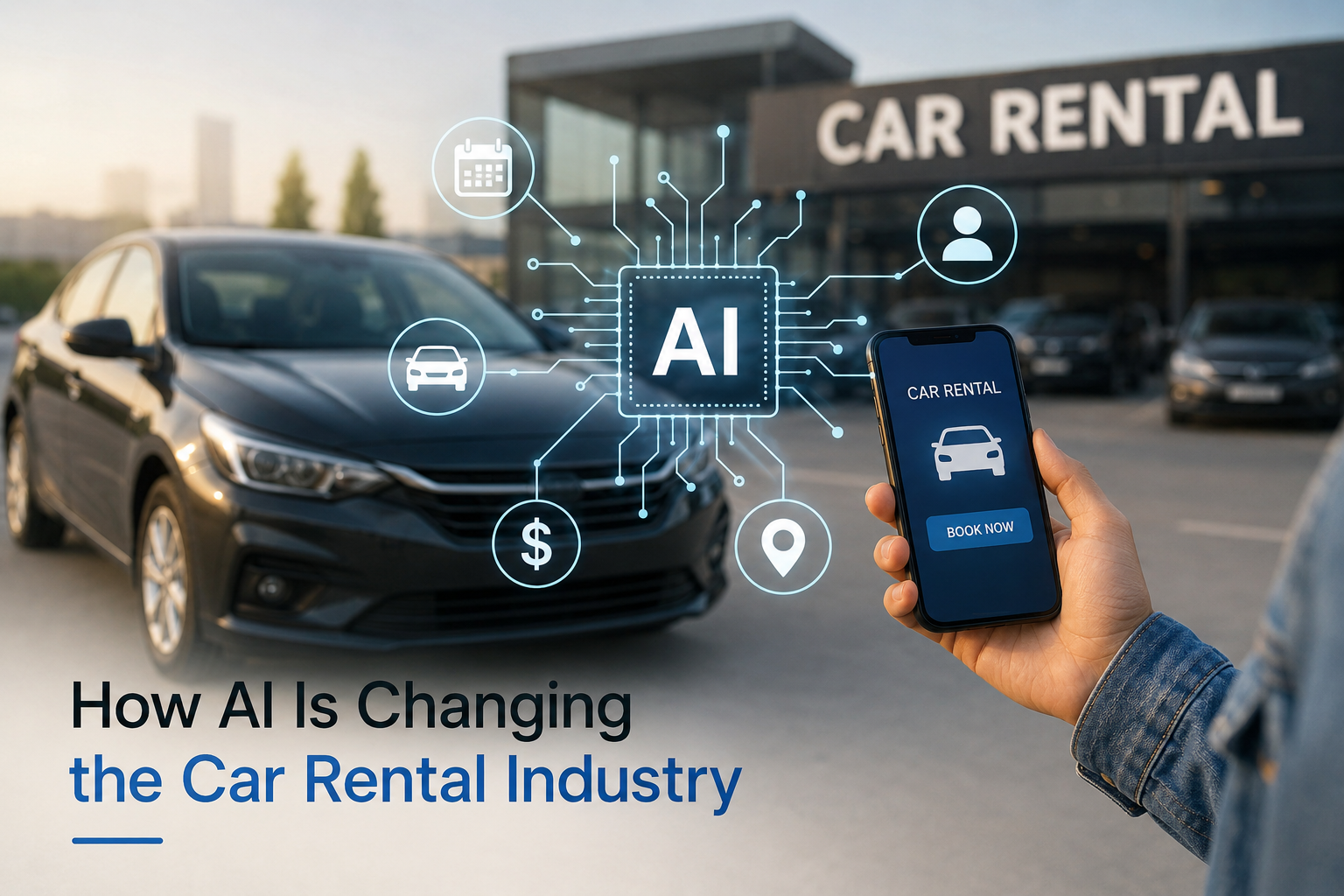
Artificial intelligence is rapidly transforming the car rental industry. Rental companies are using AI to automate bookings, allocate vehicles, predict customer demand, plan efficient routes, and improve passenger safety. These technologies help providers manage large fleets while offering customers faster and more reliable transportation.
Businesses looking for professionally managed transportation can explore our car rental service in India for corporate travel, airport transfers, and long-term mobility requirements.
Previously, most rental operations depended on phone calls, spreadsheets, and manual coordination. Booking teams had to contact fleet managers, confirm availability, calculate prices, and assign chauffeurs separately. However, AI-powered systems can now connect these activities through a centralized platform.
AI does not eliminate the need for booking executives, fleet managers, or professional chauffeurs. Instead, it gives them accurate information to make better decisions and provide a smoother customer experience.
AI Fundamentals
What Is AI in the Car Rental Industry?
Artificial intelligence enables software to analyze information, identify patterns, and recommend suitable actions. Within the car rental industry, this information may come from customer bookings, GPS systems, vehicle sensors, maintenance records, and traffic conditions.
For example, AI can study past reservations to predict how many sedans, SUVs, or premium cars will be required in a particular city. Similarly, it can examine vehicle data to identify cars that may need maintenance.
How AI Works in Car Rental
Customer Bookings
→
AI Analysis
→
Demand Prediction
→
Smarter Operations
Booking Data
Customer reservations & travel patterns
GPS & Vehicles
Location tracking & vehicle status
Maintenance Data
Service history & health monitoring
Key Takeaway
Therefore, AI helps rental companies move from reactive operations to better-planned and data-driven transportation management.
AI Booking Automation
1. Faster Car Rental Bookings
Traditional bookings may involve several telephone calls between the customer, reservation team, and fleet manager. The team must confirm vehicle availability, calculate charges, and share booking information manually.
AI-powered booking platforms simplify this process. Customers can provide their pickup point, reporting time, destination, vehicle category, and trip requirements. The system can then check availability, suggest a suitable car, and prepare an estimated quotation.
For regular corporate customers, the platform may remember approved vehicle categories, common pickup locations, and billing preferences. Therefore, HR, administration, and travel-desk teams do not need to submit the same information for every booking.
Automation also reduces common errors, including duplicate reservations, incorrect pickup times, and missing passenger details.
2. Smarter Vehicle Allocation in the Car Rental Industry
Vehicle allocation involves more than selecting any available car. A rental company must consider the vehicle’s location, category, maintenance condition, chauffeur availability, and upcoming reservations.
Vehicle Location
Vehicle Category
Maintenance Status
Driver Availability
AI can compare these factors and recommend the most appropriate vehicle. For example, if two sedans are available, the platform may assign the one located closer to the passenger’s pickup point.
Better allocation reduces empty kilometers—the distance a vehicle travels without a customer before or after a trip. Consequently, rental providers can reduce fuel consumption, control operating costs, and improve on-time pickups.
Companies that require vehicles regularly can explore a professionally managed monthly car rental service for executive and corporate transportation.
3. AI Helps Predict Customer Demand
Car rental demand varies according to time, location, and season. Airport transfers may increase during early mornings, whereas business travel is often concentrated around office hours.
AI Analyses
Historical Bookings
Travel Patterns
Seasonal Trends
Business Demand
AI analyses historical reservations and customer travel patterns to predict where vehicles may be required.
Although AI predictions are not always perfect, they give fleet teams a stronger foundation for planning than guesswork alone.
4. Transparent Pricing in the Car Rental Industry
Car rental prices depend on several factors, including vehicle category, distance, booking duration, city, chauffeur allowance, and additional services.
AI systems can analyze these variables and generate estimates quickly.
Pricing Should Clearly Include
- Base rental charges
- Included kilometres and hours
- Additional kilometre rates
- Chauffeur and night allowances
- Toll and parking charges
- Applicable taxes
- Cancellation conditions
AI should make pricing more accurate and consistent rather than introduce unexplained charges.
5. Predictive Maintenance in the Car Rental Industry
Vehicle maintenance is one of the most useful applications of AI in the car rental industry. Instead of waiting for a vehicle to break down, companies can use operational data to identify possible mechanical issues early.
Kilometres Travelled
Engine & Battery Warnings
Brake & Tyre Records
Fuel Efficiency
Previous Repairs
Service History
If unusual patterns appear, the system can alert the fleet team. The vehicle can then be inspected before it is assigned to another customer.
According to IBM’s fleet maintenance guide, AI and connected technologies can help fleet managers recognise patterns and early warning signs in vehicle data.
Nevertheless, AI alerts cannot replace physical inspections or trained technicians. Instead, they help maintenance teams identify which vehicles require immediate attention.
6. Intelligent Route Planning
AI-powered route planning considers live traffic, road restrictions, previous congestion patterns, pickup deadlines, and expected journey time.
Live Traffic
Road Restrictions
Pickup Deadlines
Journey Time
For an airport transfer, the system can calculate when the vehicle should leave based on current traffic and the passenger’s flight schedule. It may also alert the operations team if congestion could delay the pickup.
Route optimization is especially useful for employee transportation services. When multiple employees require pickups, AI can group nearby locations and recommend an efficient sequence.
This reduces unnecessary kilometers, employee waiting, and excessive travel time. However, chauffeurs should still be allowed to adjust the suggested route when local road conditions require it.
The NITI Aayog data-driven mobility report also discusses how artificial intelligence and mobility data can support transportation planning.
AI-based route planning is particularly useful for employee transportation services, where multiple pickup and drop locations must be managed efficiently.
The NITI Aayog Data-Driven Mobility report explains how mobility data and artificial intelligence can support better transportation planning and resource allocation.
7. Better Passenger Safety in the Car Rental Industry
Safety is an important responsibility for every professional rental company. AI can support passenger safety by monitoring active journeys and identifying unusual driving patterns.
Connected systems may detect:
Sudden acceleration or harsh braking
Repeated speeding
Unexpected route deviations
Unplanned vehicle stoppages
Excessive chauffeur duty hours
Delayed pickups and arrivals
When unusual activity occurs, the system can send an alert to the control room. The operations team can then contact the chauffeur or passenger and determine whether help is required.
Live GPS tracking and route-deviation alerts can be particularly useful for women traveling at night, senior passengers, and employees working late shifts.
However, trained staff should review every alert. An unexpected stop may indicate a problem, but it could also result from traffic, a police checkpoint, or a scheduled passenger break.
8. Faster Customer Support with AI Chatbots
Customers frequently ask about vehicle availability, rental prices, required documents, cancellation conditions, and chauffeur charges. An AI chatbot can answer basic questions, collect journey details, and direct complex inquiries to a support representative.
Before the Trip
Vehicle availability, prices, documents and cancellation conditions
During the Trip
Booking information, chauffeur details and emergency contact numbers
After the Trip
Invoices and booking records
During an ongoing trip, the chatbot may also help passengers access booking information, chauffeur details, invoices, and emergency contact numbers.
This provides faster assistance, particularly outside standard working hours. Nevertheless, customers must be able to contact a real representative during a breakdown, safety concern, payment dispute or booking emergency.
AI should support customer service rather than create a barrier between the company and its passengers.
9. Personalized Customer Experiences
Every customer has different transportation requirements. A business executive may need a premium sedan, while a family traveling with luggage may require a spacious SUV.
Individual Customers
AI can analyze previous booking information to recommend suitable vehicle categories and commonly used pickup locations.
Corporate Customers
The system may remember authorized vehicle categories, reporting locations, and billing preferences.
AI can analyze previous booking information to recommend suitable vehicle categories and commonly used pickup locations. If someone regularly books early-morning airport transfers, the platform can pre-fill familiar details for the next reservation.
For corporate customers, the system may remember authorized vehicle categories, reporting locations, and billing preferences. As a result, the booking process becomes faster and more consistent.
However, companies should collect only the information necessary to provide the service. Customers should also understand how their personal data is stored and used.
10. Corporate Travel Management in the Car Rental Industry
Organizations frequently arrange transportation for employees, executives, clients, airport pickups, and corporate events. Managing these requirements manually can make billing and reporting difficult.
AI platforms help corporate travel teams monitor the following:
Total bookings by department
Frequently travelled routes
Vehicle-category usage
Kilometres and duty hours
Delays and cancellations
Monthly transportation expenses
Service-level performance
These insights help HR, administration, procurement, and travel-desk teams make better decisions. For instance, if daily bookings on one route remain consistent, switching to a monthly plan may provide better value.
Businesses with multiple mobility requirements can explore professional corporate transportation services for employee, executive, and client travel.
Businesses managing executive, client and multi-city travel can explore our Corporate Transportation Services for professionally coordinated mobility solutions.
11. Lower Operating Costs for Rental Companies
AI can help rental companies reduce expenses through better vehicle utilization, route planning, and maintenance scheduling.
Lower Fuel Use
Reducing empty kilometers lowers fuel consumption.
Fewer Repairs
Early maintenance warnings may prevent expensive repairs.
Better Fleet Balance
Demand forecasting can reduce shortages and excess vehicles.
Reducing empty kilometers lowers fuel consumption. Early maintenance warnings may prevent expensive repairs and unexpected downtime. In addition, demand forecasting can stop companies from keeping too many vehicles in one location while another city faces a shortage.
Better utilization allows providers to complete more bookings with their available fleet. These operational savings may also help companies offer more predictable rental rates.
However, customer charges will still depend on the selected vehicle, travel distance, booking duration, and service requirements.
Challenges & Considerations
Challenges Facing the AI-Powered Car Rental Industry
Despite its advantages, using AI also creates challenges that rental providers must manage responsibly.
Customer Data Privacy
Booking histories, GPS locations, and identity details contain sensitive information. Companies should collect only necessary data and limit access to authorized employees.
Inaccurate AI Recommendations
AI depends on the quality of available information. Sudden road closures, incomplete records, or unexpected demand can produce inaccurate results. Therefore, important operational decisions still need human review.
Cybersecurity Risks
Connected platforms can become targets for unauthorized access. Strong passwords, controlled access, regular software updates, and security monitoring are essential.
Excessive Dependence on Automation
Technology cannot understand every real-world travel situation. Professional chauffeurs, experienced fleet managers, and responsive customer support teams remain necessary.
Responsible AI
The NITI Aayog principles for responsible AI highlight important areas such as safety, privacy, transparency, and accountability.
Future of AI in the Car Rental Industry
In the future, booking, vehicle allocation, GPS tracking, chauffeur scheduling, maintenance, and billing systems are likely to become more closely connected.
Customers may receive more accurate vehicle-arrival times, proactive delay alerts, and personalized booking suggestions. Meanwhile, fleet managers may be able to identify maintenance risks and changing demand before they affect operations.
Although autonomous vehicles could influence transportation in the future, chauffeur-driven rentals will remain important in India. Corporate journeys, employee mobility, airport transfers, and senior passenger travel often require professional human assistance.
Therefore, successful providers will combine useful technology with trained chauffeurs, well-maintained vehicles, and responsive customer support.
Final Thoughts
AI is transforming the car rental industry by improving bookings, vehicle allocation, demand forecasting, route planning, maintenance, and passenger safety. Customers benefit from faster assistance and more reliable journeys, while rental providers can reduce manual work and manage their fleets efficiently.
However, AI must be implemented responsibly. Human supervision, transparent pricing, customer privacy, and professional support remain essential for delivering dependable transportation.
Indian Travel House provides professionally managed car rental services in India for corporate travel, employee transportation, airport transfers, and long-term mobility requirements.
AI Knowledge Base
Frequently Asked Questions
Find answers to the most common questions about artificial intelligence in the car rental industry.
How is AI changing the car rental industry?
AI is improving bookings, vehicle allocation, pricing, route planning, predictive maintenance, safety monitoring, and customer assistance.
How does the car rental industry use AI for bookings?
AI checks vehicle availability, records journey requirements, recommends suitable cars, and prepares estimated rental charges.
Can AI improve passenger safety?
Yes. It can detect speeding, harsh braking, unexpected route changes, and excessive chauffeur duty hours. However, human teams should review these alerts.
How does AI help maintain rental vehicles?
AI analyzes vehicle mileage, service history, and warning data to identify possible mechanical problems before a breakdown occurs.
Will AI replace professional chauffeurs?
AI is unlikely to replace chauffeurs soon. Instead, it will assist them with navigation, traffic information, and safety alerts.
Can AI reduce car rental costs?
AI can reduce operating expenses through better routes, vehicle utilization, and maintenance planning. Rental prices still depend on the vehicle, distance, and booking duration.
What is the future of the car rental industry?
The industry will become more connected, with AI supporting bookings, fleet monitoring, customer communication, maintenance, and corporate travel reporting.