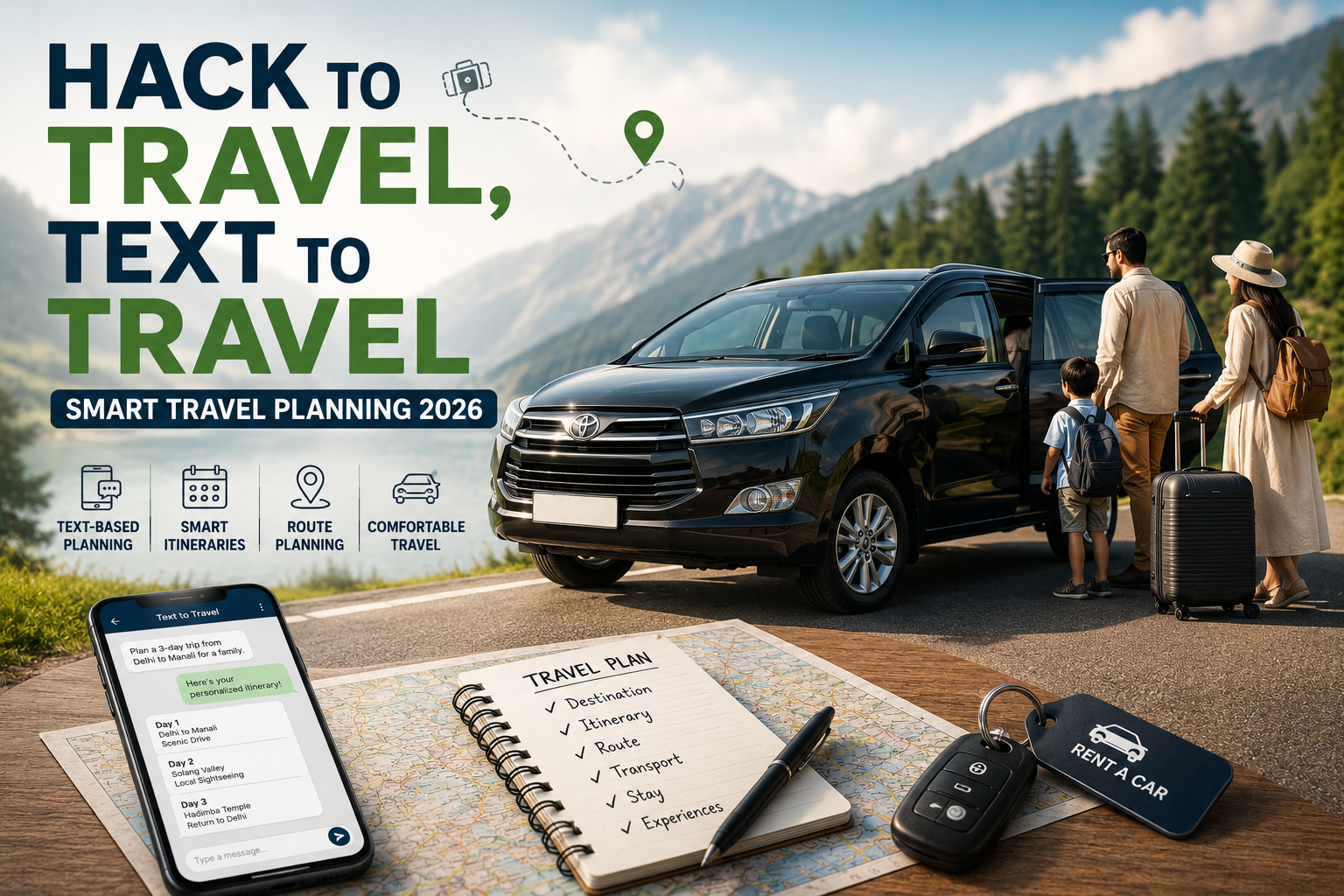
Hack to Travel is about finding smarter and more practical ways to plan, organize, and enjoy a journey. From using digital maps and AI-powered tools to creating efficient itineraries and comparing transportation options, modern travelers can use simple travel hacks to save time and reduce unnecessary planning. The idea of Text to Travel takes this one step further by allowing travelers to describe their trip requirements in simple language and turn those requirements into useful travel ideas.
The idea behind Hack to Travel is simple: find smarter ways to plan and manage a trip without making the process unnecessarily complicated. A travel hack could be a better way to organize a route, reduce unnecessary travel, choose the right transportation, or make better use of limited time.
At the same time, Text to Travel represents a newer approach to travel planning where travelers can describe their requirements in ordinary language and use text-based tools to develop ideas, itineraries, and travel plans.
These approaches do not replace proper research or real-world experience. Instead, they can make the planning process faster, more organized, and more personalized.
“Hack to Travel” refers to smart techniques, shortcuts, and planning strategies that can make traveling more convenient.
A travel hack does not necessarily mean finding the cheapest flight or hotel. It can be any approach that helps you use your time, money, or resources more effectively.
Practical ideas that can make trip planning easier
Text to Travel describes the use of text-based or conversational technology to assist with travel planning.
Instead of searching separately for every requirement, travelers can explain what they want in a simple message.
“I have three days in Jaipur with my family. I want to visit historical attractions, try local food, and avoid a very busy schedule.”
A text-based travel assistant can use these requirements to create a starting point for an itinerary.
The traveler can then refine the request:
This makes travel planning more conversational rather than relying entirely on individual searches.
The traditional travel-planning process often looks like this:
Modern digital planning can look more like
This change is important because travelers can begin with their requirements instead of knowing exactly what they need to search for.
For example, someone may know that they have five days available but may not know which destinations should be combined. A conversational tool can help generate possible routes that the traveler can then research further.
Text-based travel planning can be useful at several stages of a journey.
Travelers can describe their interests and receive suggestions for destinations or experiences that may match them.
For example:
“Suggest peaceful hill destinations for a three-day trip from Delhi.”
This can create an initial list that can then be researched further.
Instead of manually creating a day-by-day schedule, travelers can provide the number of days and their priorities.
Text can also be used to think through multi-city journeys.
can be evaluated as a complete route rather than four separate searches.
Travelers can compare different transportation approaches based on distance, group size, luggage, and flexibility.
A text-based tool can also help create a packing checklist based on destination, season, trip duration, and activities.
AI can be useful for generating ideas, but it should not be treated as the final source for every travel decision.
A better process is
Mention:
Use a text-based tool to create an initial itinerary or route.
Ask specific follow-up questions to remove unnecessary activities or change the pace.
Use maps or reliable navigation tools to verify actual travel time.
Check official tourism websites, attraction websites, and transportation providers for current information.
Only after verifying important details should you book accommodation, transportation, and activities.
This approach combines the speed of AI with the reliability of real-world verification.
One of the most useful travel hacks is to plan the geographical route before deciding what to do every day.
Suppose you want to visit three cities.
Instead of immediately creating:
Day 1 in City A
Day 2 in City B
Day 3 in City C
First determine how you will travel between them.
A logical route can reduce unnecessary backtracking and make the journey more comfortable.
Another simple strategy is to organize sightseeing geographically.
If two attractions are located close to each other, visiting them on the same day can reduce transportation time.
This can be particularly valuable in large cities where traffic can turn a short geographical distance into a long journey.
A detailed itinerary can be useful, but an overloaded itinerary can make a holiday exhausting.
Instead of filling every hour with activities, leave space for:
A realistic itinerary is often more valuable than a longer list of attractions.
When comparing transportation options, don’t look only at the advertised price.
For families or groups, a private vehicle may sometimes provide additional convenience because everyone can travel together and luggage does not need to be moved between multiple modes.
The right option depends on the route, group size, budget and travel priorities.
Family travel often involves more planning than solo travel.
Parents may need to consider children’s schedules, elderly family members, luggage, meals, and rest periods.
A text-based travel tool can help create an initial family itinerary by considering these requirements.
“Plan a four-day family trip to Uttarakhand with children and grandparents. Keep the itinerary relaxed and avoid long daily drives.”
The generated plan can then be checked against actual road conditions, attraction timings, and accommodation locations.
Business travel has a different priority: time and reliability.
A business traveler may have only one or two days to attend meetings in different locations.
Text-based planning can help organize:
Companies managing regular employee or executive travel can also consider professional corporate transportation services for planned journeys.
Road trips are particularly suitable for detailed planning because several factors influence the journey.
A useful text prompt can include:
However, actual road conditions, weather, and traffic should always be checked close to departure.
Airport transfers are an area where advance planning can make a significant difference.
Before arranging transportation, note:
For business travelers and families, arranging transportation in advance can reduce uncertainty after landing.
A chauffeur-driven airport transfer can also be useful when travelers need direct transportation to a hotel, office, or event venue.
The quality of a text-based travel plan depends heavily on the information provided.
Compare these two prompts:
“Plan a trip to Jaipur.”
“Plan a three-day Jaipur trip for two adults from Delhi. We prefer historical attractions, local food, and a relaxed schedule. Suggest a practical route and include transportation considerations.”
When using text-based travel tools, include:
This simple framework can produce more useful planning results.
Technology can make planning easier, but there are some things travelers should still verify themselves.
A generated itinerary cannot guarantee that a hotel, flight, train, or activity is available.
Estimated travel times can change significantly because of traffic.
Weather forecasts change and can affect outdoor activities and road travel.
Events, construction, holidays, and local regulations can affect access to destinations.
Travel prices can change frequently.
A technically efficient itinerary may not necessarily be comfortable for your family or group.
This is why the best approach is to use technology for planning and research while using verified information for final decisions.
Before finalizing your trip, check:
Some of the most valuable hacks are simple.
Store your bookings, addresses, transportation details, and important contacts together.
Group activities based on geographical proximity.
Don’t leave important airport or event transfers until the last minute.
Have an alternative plan for important journeys.
Changing hotels every night can consume valuable travel time.
Where possible, plan longer journeys around traffic and weather conditions.
A small amount of extra time can prevent one delay from disrupting the entire day.
Technology can help you decide where and when to travel, but reliable transportation is still required to physically move between destinations.
A chauffeur-driven vehicle can be useful when a trip involves:
Passengers can focus on the journey while the chauffeur handles driving, navigation, and parking.
For multi-city trips, this can also make it easier to maintain a flexible schedule.
The future of travel planning is likely to become increasingly conversational.
Instead of opening separate platforms for every small requirement, travelers may increasingly begin with a single description of what they want.
“I have five days, a moderate budget, and want a relaxed family trip from Delhi to Uttarakhand with minimal driving.”
A smart travel system can potentially use these requirements to help organize destinations, routes, and activities.
The important change is that travelers are moving from searching for individual answers to describing complete travel goals.
However, human judgment will remain important because travel involves preferences and real-world conditions that cannot always be predicted.
If you want a simple framework for planning your next trip, use this process:
“`
Decide where you want to go, why you are going and how much time you have.
Explore destinations, attractions and transportation options.
Create a realistic route and itinerary.
Evaluate different transportation and accommodation options.
Check current information from reliable sources.
Confirm the important parts of your journey.
Keep enough flexibility to enjoy the trip without constantly following a rigid schedule.
“`
“`
Hack to Travel refers to smart travel techniques and planning strategies that help travelers save time, reduce unnecessary effort and organize their journeys more efficiently.
Text to Travel refers to using text-based or conversational technology to assist with travel research, itinerary creation, route planning and other travel-related decisions.
AI can help create an initial itinerary and organize travel ideas, but important details such as availability, prices, timings, weather and local conditions should be verified before booking.
It can help travelers turn simple requirements into an initial itinerary, compare ideas, organize routes and identify transportation considerations.
Plan the geographical route first, then organize attractions and activities around that route. This can help reduce unnecessary backtracking.
Yes. A chauffeur-driven vehicle can be convenient for families, particularly when the journey involves multiple destinations, elderly passengers, children or significant luggage.
No. AI can be a useful planning assistant, but time-sensitive information should be verified through official websites, maps and reliable transportation providers.
For destination information and tourism resources, travelers can also check the official Incredible India website.
“`
“`
Hack to Travel is not about finding shortcuts at any cost. It is about making smarter decisions throughout the travel-planning process.
From organizing destinations geographically and creating realistic itineraries to comparing transportation options and leaving sufficient buffer time, small planning improvements can make a major difference to the overall journey.
Text to Travel adds a new dimension by allowing travelers to describe their requirements in natural language and use technology to create an initial travel plan. This can save research time and make trip planning more interactive.
The smartest approach is to combine technology with practical judgment: use text and AI tools to explore possibilities, verify important information through reliable sources, and then make the final travel decisions based on your actual requirements.
Whether you are planning a family holiday, business trip, road trip or multi-city journey, smarter planning can help you spend less time dealing with logistics and more time enjoying the destination.
“`