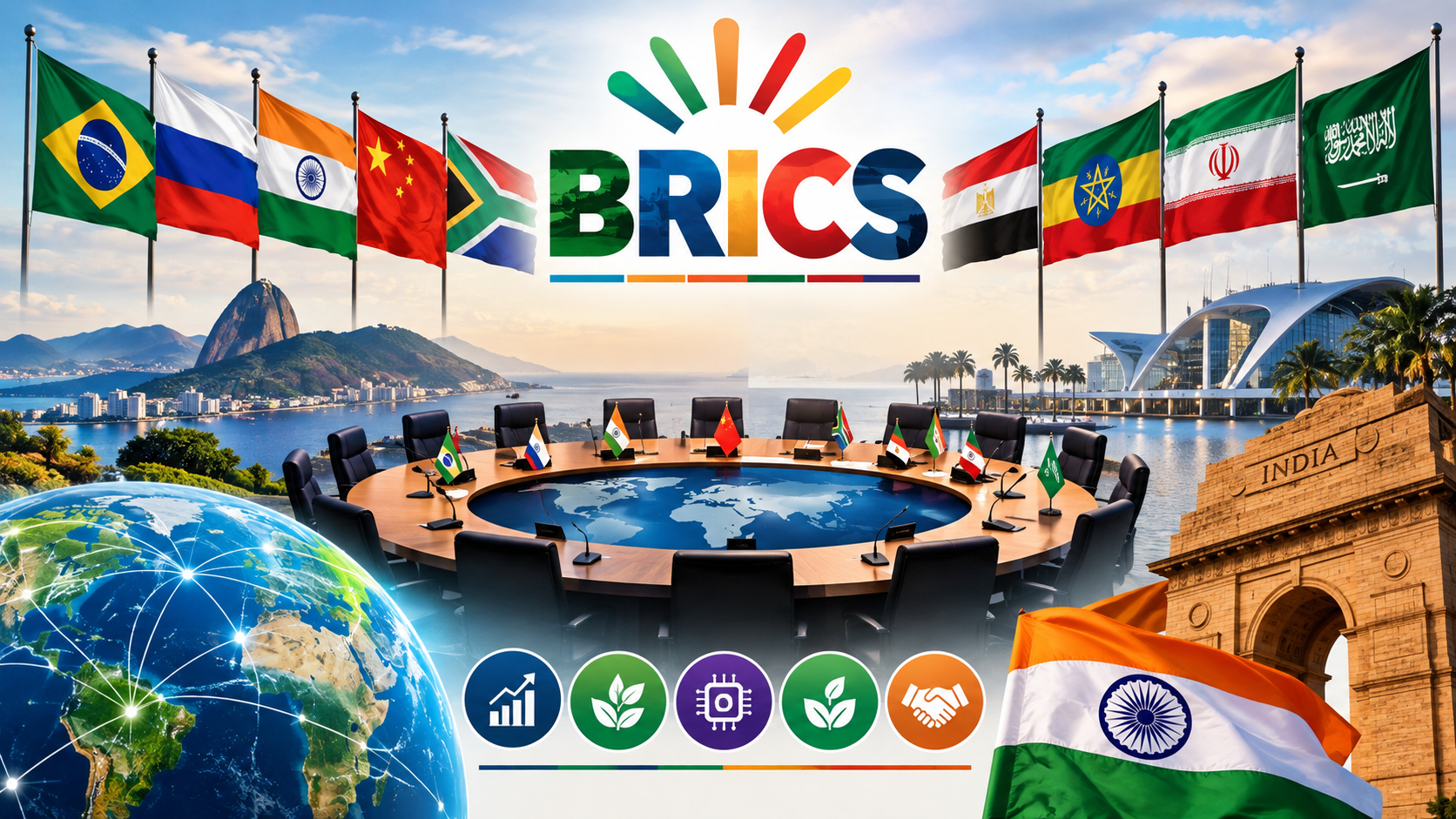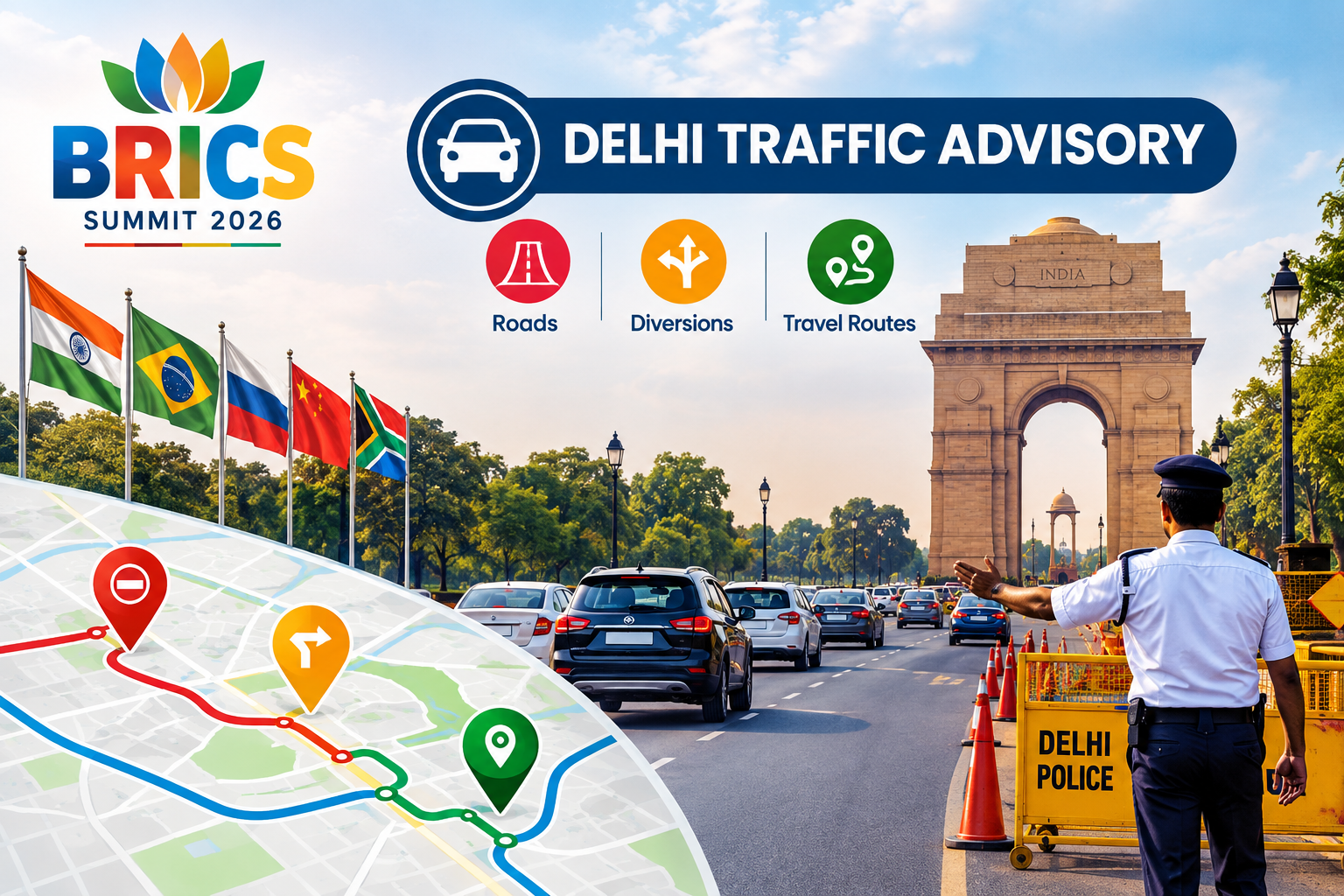
The BRICS Summit will bring international leaders and delegations to New Delhi, and Delhi commuters should expect changes in traffic movement during the summit period. The 18th BRICS Leaders’ Summit is scheduled at Bharat Mandapam from September 11 to 13, 2026, with the main leaders’ meetings taking place on September 12 and 13.
Business travelers who need reliable transportation during the summit can explore Corporate Car Rental Services for planned airport transfers, meetings, and city travel.
For residents, business travelers, airport passengers, and people travelling across Central and South Delhi, the most important issue is not only the summit itself but also the temporary traffic regulations, controlled roads, and route diversions associated with VIP and delegation movement.
Delhi Traffic Police has issued a dedicated advisory for September 11–13. The plan includes more than 35 controlled roads and 22 diversion points. Commuters have been advised to plan journeys in advance, allow additional travel time, and follow traffic personnel and real-time advisories.
If you need to travel through Delhi during the BRICS Summit 2026, this guide explains the major affected corridors, airport routes, railway station access, and practical travel tips.
The traffic arrangements are primarily designed to facilitate the movement of
international delegations and VVIP convoys around Bharat Mandapam and other
secured areas.
This does not mean that every listed road will remain completely closed throughout the day.
Traffic may be controlled, stopped temporarily, or diverted depending on convoy movement.
and security requirements.
The most affected areas are expected to include parts of
New Delhi, Central Delhi, and South Delhi, along with important roads
connecting diplomatic areas, hotels, Bharat Mandapam, and major transport hubs.
For commuters, the practical approach is to avoid unnecessary travel through
the main controlled corridors and keep alternative routes available.
Delhi Traffic Police’s arrangements cover a large network of roads. Important roads and corridors appearing in the traffic arrangements include
Other controlled stretches reported in the wider summit traffic plan include parts of
Tilak Marg, Firozeshah Road, Tughlaq Road, Bhagwan Das Road, Kartavya Path, Purana Qila Road, Safdarjung Road, Nyaya Marg, C-Hexagon, and Sher Shah Suri Marg.
Because restrictions can depend on convoy movement, commuters should not assume that a road listed in the advisory will be continuously inaccessible.
Always check the latest Delhi Traffic Police update before starting a journey.
The traffic plan includes 22 diversion points where vehicles may be redirected when controlled movements are active.
One important area is around Mathura Road and central Delhi, where traffic can be diverted towards alternative corridors depending on the direction of movement.
For commuters crossing Central Delhi, routes involving the Ring Road, Ashram Chowk, and Mathura Road can become particularly important. Authorities have also advised people to use public transport, especially the Metro, where practical.
The exact diversion at a particular intersection can change according to security requirements. Therefore, a route that works in the morning may not necessarily be the best option later in the day.
Airport travel is one of the biggest concerns during the BRICS Summit.
Delhi Traffic Police has strongly recommended that passengers consider the Metro for airport travel because road traffic may be affected by convoy movements and diversions. Passengers who choose to travel by road should leave considerably earlier than usual.
For passengers travelling from Gurugram towards Terminals 2, 3, and 4, the suggested route includes:
NH-48 → Rao Gajraj Singh Marg → Old Delhi-Gurugram Road → UER-II → Service Road → T3 Terminal Road
For Terminal 1, alternative routing through NH-48 and the Mahipalpur/Ulaanbaatar Marg corridor has been suggested.
Passengers travelling from Dwarka can use:
Sector 22, Dwarka Road → UER-II
The new tunnel towards Terminal 3 is also part of the suggested airport access route.
For Terminal 3, a suggested route is
Ring Road → AIIMS Chowk → Moti Bagh Chowk → RTR Marg → Shankar Vihar Flyover → Sanjay T-Point → NH-48 → Mahipalpur/Rangpuri → T3 Road
Another route towards the airport terminals uses the AIIMS–Ring Road–Moti Bagh–RTR Marg–Shankar Vihar–Ulaanbaatar Marg corridor.
If you have a flight during the summit period, do not plan your journey using the normal travel time. Keep a substantial buffer and check the latest traffic situation before leaving.
Passengers travelling to railway stations should also allow additional time.
New Delhi Railway Station passengers may need to approach through alternative corridors depending on their direction of travel. Routes involving ISBT Kashmiri Gate, Ring Road, Rajghat, Rani Jhansi Marg, DBG Road, and Panchkuian Road are among the corridors referenced in the travel arrangements.
Allow extra road-access time even when your train schedule remains unchanged.
Passengers should avoid leaving home at their normal departure time simply because the train journey itself is unchanged. Road access to the station may take longer during convoy movements.
For many journeys through Central and South Delhi, the Metro can be a practical alternative to road travel.
The Delhi Traffic Police has specifically recommended Metro travel for airport passengers during the advisory period.
However, Metro may not be convenient for every passenger, particularly those travelling with heavy luggage, elderly family members, or multiple passengers. In such cases, road travel can still be considered, but additional time should be kept for possible traffic controls.
Business travelers should be particularly careful when scheduling meetings during the summit.
If you have an airport pickup followed by a hotel check-in and client meeting, avoid keeping very short gaps between appointments.
Airport
→
Hotel
→
Client Office
→
Business Meeting
→
Hotel
A journey that normally takes a limited amount of time could become considerably longer if a convoy temporarily stops traffic.
If your schedule includes multiple meetings, consider keeping one vehicle available for the entire itinerary rather than arranging separate rides for every journey.
Companies can also plan corporate transportation services in advance for employees, clients, and visiting executives.
Travelers who need door-to-door transportation can consider a professionally managed chauffeur-driven vehicle, particularly for business meetings, airport transfers, and multi-stop itineraries.
However, travelers should remember that having a private vehicle does not guarantee access through a controlled road. Security-related restrictions apply to road traffic regardless of whether you are using a taxi, rental car, or private vehicle.
The advantage of pre-arranged transportation is that the driver can monitor route conditions and adjust the journey when diversions are active.
For business travelers, this can be useful when coordinating airport pickups, hotels, offices, and multiple meetings during the summit period.
If you live or work in Delhi, these simple precautions can reduce travel problems:
Road-based public transport may also be affected when traffic is diverted or temporarily regulated.
Taxis and autos may need to follow alternative routes, while buses can be diverted or have their movement adjusted in controlled areas. Metro services can therefore become a useful alternative for passengers whose destinations are close to Metro stations.
Emergency and essential services are handled separately under the traffic arrangements.
For travelers using taxis or chauffeur-driven cars, it is better to communicate the destination clearly and allow extra time rather than relying on the normal estimated journey duration.
Because VIP movement can happen at different times, traffic controls may not follow a simple fixed timetable on every road.
This is why travelers should check official updates before starting their journey rather than relying only on a static route plan.
The BRICS Summit 2026 is scheduled in New Delhi, with the main Leaders’ Summit taking place on September 12–13. Traffic arrangements around the event cover September 11–13.
More than 35 roads are included in the traffic-control arrangements. Important corridors include Sardar Patel Marg, Janpath, Akbar Road, Mathura Road, Shanti Path, Ashoka Road, Teen Murti Marg, and several roads in Central and South Delhi.
Delhi’s traffic plan includes 22 diversion points connected with the summit traffic arrangements.
Yes. Airport access continues, but road travel may take longer because of traffic controls and diversions. The Delhi Traffic Police has recommended the Metro and advised passengers to allow extra time.
You can travel by car when necessary, but you should expect possible diversions and delays. Check the latest traffic advisory and keep additional travel time.
No. Roads listed in the traffic arrangements can be controlled, regulated, or diverted depending on convoy and security movement. Conditions can change during the day.
The BRICS Summit is an important international event for New Delhi, but for ordinary commuters the biggest practical issue will be managing traffic during the summit period.
With more than 35 roads under traffic-control arrangements and 22 diversion points, journeys through Central and South Delhi may take longer than usual. Airport and railway passengers should plan especially carefully and leave additional time for their journeys.
If road travel is necessary, check the latest Delhi Traffic Police advisory, follow diversion instructions, and avoid unnecessary travel through controlled corridors. For airport journeys, the metro should be considered where practical.
For business travelers, families, and groups who require door-to-door transportation, advance planning can make travel more manageable. However, no private vehicle can bypass security restrictions, so routes should always be planned around the latest traffic instructions.