Delhi Non-BS6 Car Ban 2026: Which Vehicles Are Allowed?
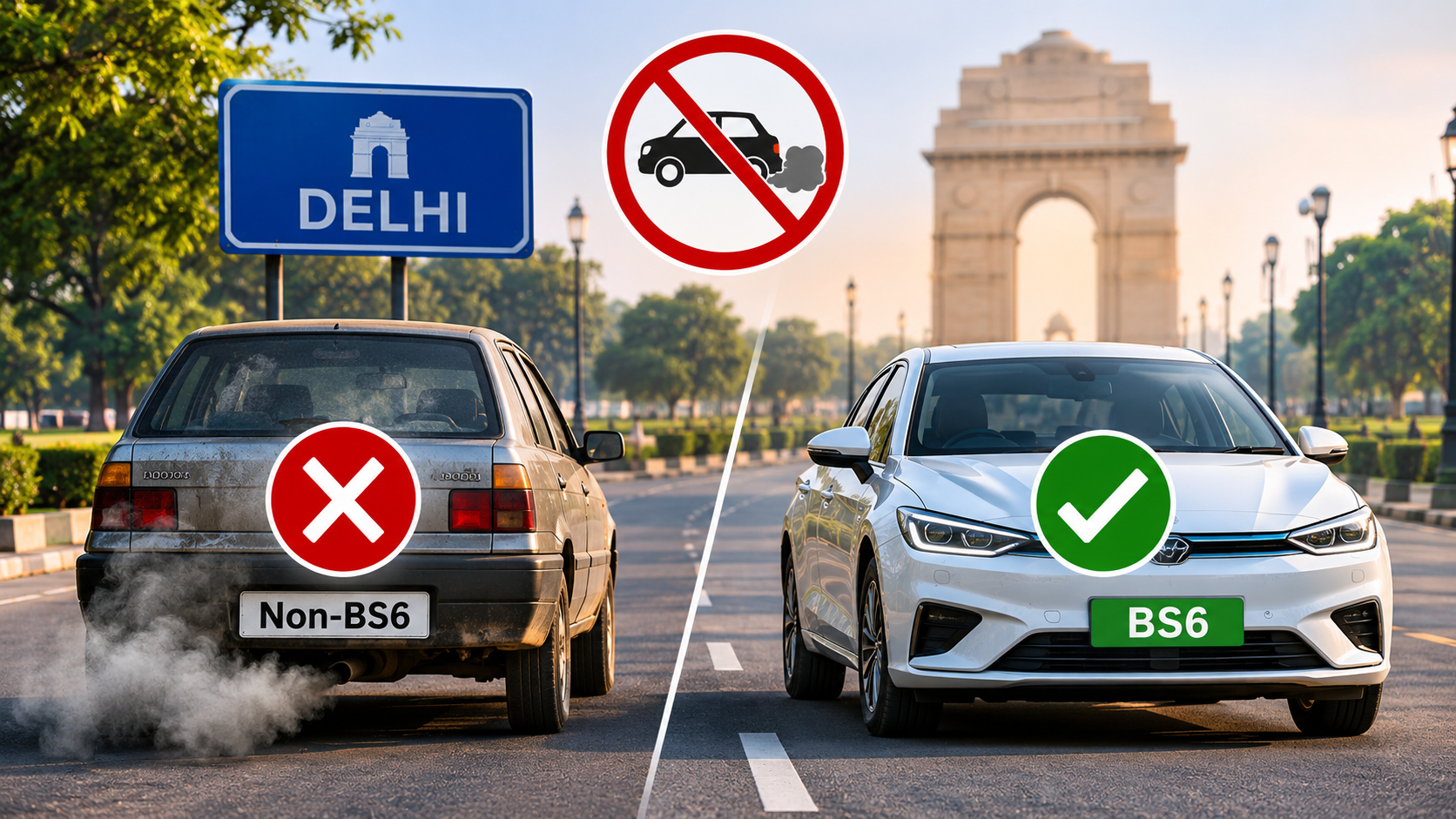
The Delhi Non-BS6 Car Ban 2026 has introduced important changes for vehicle owners travelling into the national capital. From November 1, 2026, petrol and diesel vehicles registered outside Delhi that do not meet Bharat Stage VI (BS6) emission standards face entry restrictions as part of the government’s winter pollution-control measures.
The restrictions are scheduled to remain in effect until January 31, 2027, affecting commuters travelling from neighbouring cities such as Noida, Ghaziabad, Gurugram, and Faridabad.
However, the new rule does not mean that every older car in Delhi-NCR has been banned. Vehicle registration, emission standards, fuel type, and applicable pollution-control regulations all matter.
So, which cars can enter Delhi? Are BS4 petrol and diesel vehicles banned? What about Delhi-registered cars, CNG vehicles, and electric vehicles?
Here is a detailed guide to the latest rules.
What Is the Delhi Non-BS6 Car Ban 2026?
The Delhi government has introduced restrictions on vehicles registered outside the capital that do not meet BS6 emission standards.
The measure forms part of Delhi’s winter pollution-control framework, which aims to reduce vehicular emissions during months when air quality typically deteriorates.
The restriction applies primarily to older petrol and diesel vehicles entering Delhi from other states.
Key details:
Start date: November 1, 2026
Scheduled end date: January 31, 2027
Affected area: Entry into the National Capital Territory of Delhi
Main affected vehicles: Non-Delhi-registered petrol and diesel vehicles below BS6 standards
Exemptions: CNG, electric, and officially exempted vehicles, subject to applicable conditions
The restriction is separate from additional measures that may be introduced under different stages of the Graded Response Action Plan (GRAP).
Why Has Delhi Banned Non-BS6 Vehicles?
Delhi experiences severe air pollution during winter, when several environmental and human factors contribute to deteriorating air quality.
These include vehicle emissions, road dust, industrial pollution, seasonal weather conditions, and emissions from other regional sources.
During colder months, weak winds and atmospheric conditions can allow pollutants to accumulate closer to the ground.
Reducing Vehicle Emissions
Older vehicles generally operate under less stringent emission standards than newer BS6 vehicles.
The government has therefore introduced entry restrictions to reduce emissions from older petrol and diesel vehicles travelling into Delhi.
Managing Winter Pollution
The restriction is part of a broader approach involving vehicle checks, pollution certificates, road-dust control, and other preventive measures.
Supporting Cleaner Transportation
The exemption for electric and CNG vehicles reflects the government’s efforts to encourage lower-emission transportation options.
However, vehicle compliance depends on the complete set of applicable regulations, not fuel type alone.
Delhi Non-BS6 Car Ban 2026: Which Cars Are Allowed?
One of the biggest questions among Delhi-NCR commuters is whether their existing vehicle can still enter the capital.
The following table explains the main categories under the November 2026 entry restriction.
| Vehicle category |
Delhi entry status |
| BS6 petrol car registered outside Delhi |
Allowed, subject to applicable rules |
| BS6 diesel car registered outside Delhi |
Allowed, subject to applicable rules |
| BS4 petrol car registered outside Delhi |
Restricted |
| BS4 diesel car registered outside Delhi |
Restricted |
| BS3 petrol or diesel car registered outside Delhi |
Restricted |
| CNG vehicle |
Exempt from this specific entry restriction |
| Electric vehicle |
Exempt from this specific entry restriction |
| Delhi-registered BS4 car |
Not covered by this particular out-of-state entry ban; other rules apply |
| Emergency and officially exempted vehicles |
Subject to notified exemptions |
Vehicle owners should also ensure that their registration documents, insurance, and applicable pollution certificates are valid.
Are BS4 Petrol and Diesel Cars Banned in Delhi?
The answer depends on where the vehicle is registered.
BS4 Cars Registered in UP or Haryana
If a BS4 petrol or diesel car is registered in Uttar Pradesh or Haryana, it falls within the category of vehicles restricted from entering Delhi under the November 2026 rule.
For example, a BS4 petrol car registered in Noida cannot assume that entry into Delhi is permitted simply because it has a valid registration certificate.
Similarly, a BS4 diesel car registered in Gurugram is affected by the entry restriction.
BS4 Cars Registered in Delhi
Delhi-registered BS4 vehicles are not automatically covered by the same out-of-state entry ban.
However, they remain subject to applicable vehicle-age restrictions, registration requirements, and GRAP measures.
This distinction is important because the phrase “non-BS6 car ban” can create the misleading impression that every BS4 vehicle has been prohibited throughout Delhi-NCR.
What Are BS4 and BS6 Emission Standards?
Bharat Stage emission standards regulate pollutants released by motor vehicles in India.
BS4 and BS6 represent different generations of these regulations.
BS6 standards introduced stricter emission limits and more advanced pollution-control requirements.
Key Differences Between BS4 and BS6
| Feature |
BS4 |
BS6 |
| Emission standard |
Older |
Newer and stricter |
| Nationwide implementation |
April 2017 |
April 2020 |
| Pollution-control requirements |
Less stringent |
More stringent |
| Delhi entry for out-of-state petrol/diesel cars under the current rule |
Restricted |
Generally permitted |
A vehicle’s manufacturing year may provide a clue about its emission standard, but it should not be treated as definitive proof.
Owners should check the emission norm recorded in their Registration Certificate (RC) or official vehicle records.
How Does the Ban Affect Noida, Ghaziabad, and Gurugram Cars?
The new restrictions are particularly relevant for residents who regularly travel into Delhi from neighboring NCR cities.
Noida and Greater Noida
Vehicles registered in Uttar Pradesh are considered outside-Delhi vehicles.
Owners of BS3 or BS4 petrol and diesel cars should therefore check the entry restrictions before planning journeys into Delhi.
Ghaziabad
Ghaziabad commuters travelling to Delhi for work, airport transfers, or personal appointments may also be affected.
The restriction concerns entry into Delhi, not an automatic ban on every older vehicle operating within Ghaziabad.
Gurugram and Faridabad
Haryana-registered vehicles below BS6 petrol or diesel standards face similar restrictions when entering Delhi.
This may affect employees, business travelers, and families who regularly cross the Delhi border.
Does the Ban Apply Throughout Delhi-NCR?
No. The November 1 entry restriction specifically concerns Delhi.
However, other NCR districts may face separate restrictions under applicable GRAP stages.
Vehicle owners must distinguish between Delhi’s seasonal entry restriction and wider GRAP measures.
Is a PUC Certificate Mandatory for BS6 Cars?
Yes. A valid Pollution Under Control Certificate (PUCC) remains an important compliance requirement for vehicles to which the certification rules apply.
A BS6 vehicle is not automatically exempt from pollution-document requirements.
Delhi’s pollution-control framework also includes a No PUC, No Fuel measure intended to discourage the operation of vehicles without valid certificates.
Before travelling, motorists should check:
- Vehicle registration certificate
- Applicable PUC certificate
- Motor insurance
- Driving license
- Vehicle emission standard
- Current Delhi Traffic Police advisories
A valid PUC does not override a separate entry ban. For example, an out-of-state BS4 petrol car does not become eligible for entry simply because its PUC is valid.
How Does GRAP Affect Vehicle Restrictions in Delhi-NCR?
The Graded Response Action Plan is a framework used to introduce pollution-control measures as air quality worsens.
Different GRAP stages trigger different actions.
As of November 3, 2026, Delhi-NCR is under GRAP Stage II, following worsening air quality on November 2.
Importantly, the seasonal non-BS6 entry restriction and GRAP Stage II are separate measures.
What Happens Under Stricter GRAP Stages?
Under Stage III, additional restrictions can apply to BS3 petrol and BS4 diesel light motor vehicles in specified NCR districts.
These include Delhi and designated neighboring districts such as Gurugram, Faridabad, Ghaziabad, Gautam Buddh Nagar, and Sonipat.
The exact applicability depends on the stage currently in force and the latest directions issued by the authorities.
Travellers should monitor official announcements rather than assuming that a restriction remains unchanged throughout the winter.
What Does the Vehicle Ban Mean for Daily Commuters?
The Delhi Non-BS6 Car Ban 2026 may affect thousands of people who travel between Delhi and neighboring NCR cities.
Daily Office Travel
Employees commuting from Noida, Ghaziabad, Gurugram, or Faridabad may need to reconsider their travel arrangements if their vehicles fall within the restricted categories.
Business Meetings
Professionals travelling between multiple NCR business districts should verify vehicle eligibility before planning their journeys.
Airport Transfers
Travellers using older vehicles registered outside Delhi should check whether their planned route enters the National Capital Territory.
Airport journeys are especially time-sensitive, making advance transportation planning important.
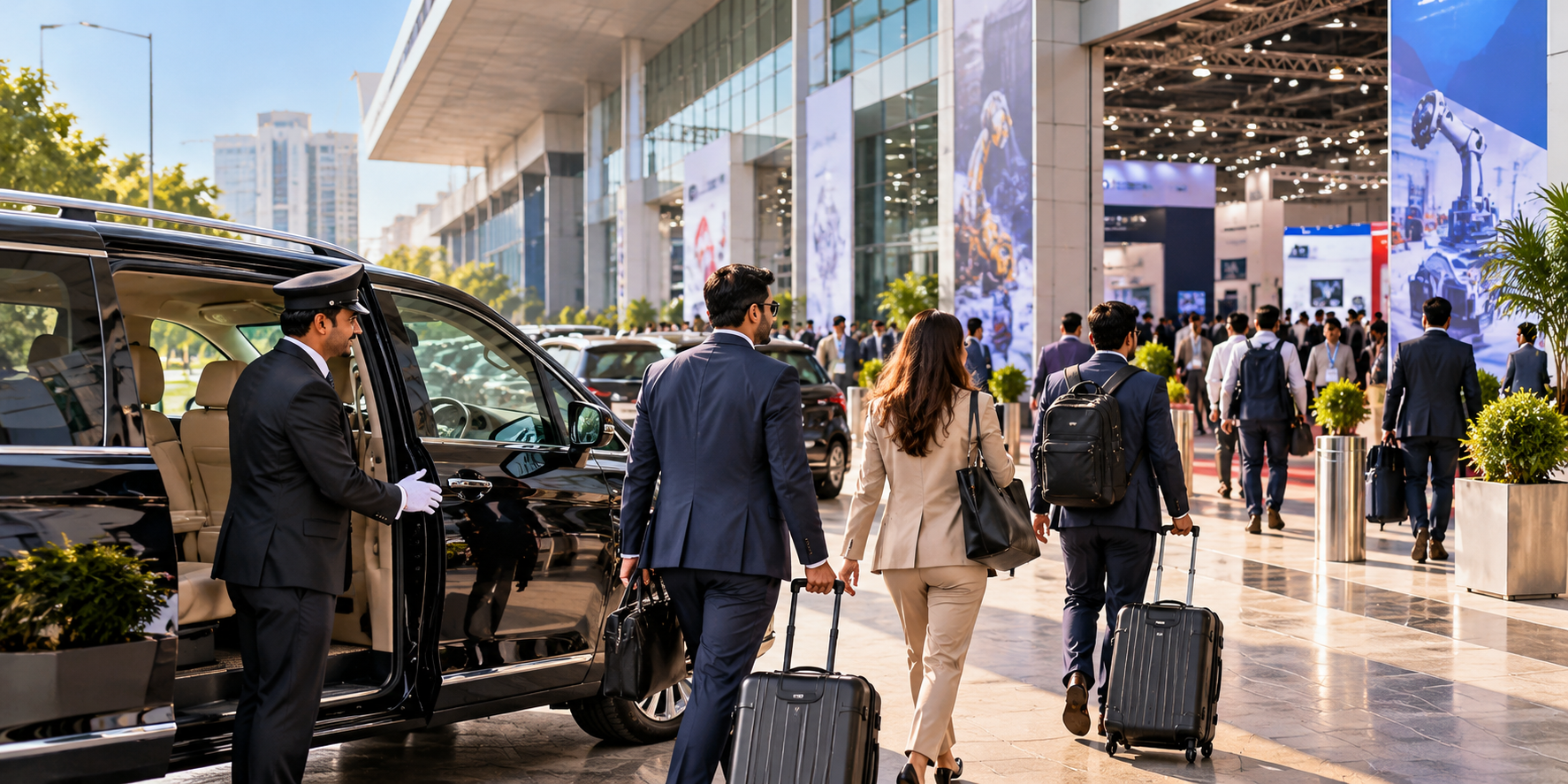
Corporate Transportation
Companies arranging employee pickups, executive travel, or guest transportation should review the emission standards and documentation of vehicles used for Delhi-bound journeys.
Non-compliant vehicles may create avoidable operational difficulties.
What Should Car Owners Do Before Entering Delhi?
Before planning a journey, vehicle owners should take a few practical steps.
Check the emission standard: Confirm whether the vehicle meets BS6 requirements using its official records.
Verify the registration location: A Delhi-registered vehicle and an out-of-state vehicle may be subject to different provisions.
Confirm PUC validity: Keep applicable pollution certificates up to date.
Review the latest GRAP stage: Additional restrictions can be introduced when pollution levels rise.
Check official traffic advisories: Enforcement procedures and temporary restrictions may change.
Consider alternative transportation: Public transport or an appropriately compliant rental vehicle may be useful if a personal vehicle is restricted.
How Indian Travel House Can Help With Delhi-NCR Travel
Vehicle restrictions can make transportation planning more complicated for individuals and businesses travelling across Delhi-NCR.
People who regularly commute between Noida, Gurugram, Ghaziabad and Delhi may need alternative travel arrangements when their personal vehicles are not eligible for entry.
For businesses, the situation also highlights the importance of checking vehicle compliance when arranging executive transportation, employee travel and airport pickups.
Indian Travel House offers chauffeur-driven transportation solutions for local, corporate and outstation travel requirements.
Before confirming a booking, travellers should request confirmation that the assigned vehicle meets the emission, registration and documentation requirements applicable to their route.
No car rental provider can override government restrictions, so compliance should remain a priority.
Frequently Asked Questions
1. When did the Delhi Non-BS6 Car Ban 2026 start?
The seasonal restriction started on November 1, 2026, and is scheduled to continue until January 31, 2027.
2. Can BS4 petrol cars enter Delhi in November 2026?
BS4 petrol cars registered outside Delhi are restricted from entering under the seasonal rule. Delhi-registered cars are subject to separate applicable regulations.
3. Are BS6 diesel cars allowed in Delhi?
Yes. BS6 diesel cars are generally permitted under this particular entry rule, provided they comply with other applicable requirements.
4. Are CNG and electric cars banned in Delhi?
No. CNG and electric vehicles are exempt from this specific non-BS6 entry restriction, subject to other applicable rules.
5. Does the ban apply to Gurugram and Noida?
The seasonal entry restriction applies when affected vehicles enter Delhi. Separate GRAP restrictions may apply within Gurugram, Noida and other NCR districts.
6. Can a BS4 car enter Delhi with a valid PUC?
A valid PUC does not cancel the entry restriction for an out-of-state BS4 petrol or diesel car.
7. Are Delhi-number BS4 cars also banned?
Not automatically under the out-of-state entry restriction. However, vehicle-age limits and applicable GRAP measures must still be followed.
8. Is the ban permanent?
The currently announced seasonal entry restriction runs through January 31, 2027. Future extensions or changes would depend on official government decisions.
The Delhi Non-BS6 Car Ban 2026 is an important change for motorists travelling into the capital during the winter pollution season.
From November 1, 2026, petrol and diesel vehicles registered outside Delhi that do not meet BS6 standards face entry restrictions, while BS6, CNG, electric and officially exempted vehicles remain eligible under the applicable conditions.
The most important distinction is that this is not a blanket ban on every non-BS6 car across Delhi-NCR.
Vehicle owners should check their registration details, emission standards, PUC validity and the latest GRAP restrictions before travelling.
For businesses and individuals planning journeys across Delhi NCR, advance transportation planning can help avoid unnecessary disruption.
Need chauffeur-driven transportation in Delhi NCR?
Visit Indian Travel House to explore available car rental options and enquire about vehicles suitable for your travel requirements.