Delhi AQI Pollution 2026: Air Quality, Causes & Safety Tips
Delhi AQI Pollution 2026 has become a major concern as the national capital faces another period of unhealthy winter air. On November 9, a day after Diwali celebrations, thick smog covered parts of Delhi-NCR, affecting visibility and raising concerns about respiratory health and daily travel.
According to the Commission for Air Quality Management (CAQM), Delhi’s overall Air Quality Index (AQI) was 372 at 1:00 AM on November 9, placing it in the Very Poor category. Several individual monitoring stations reported readings above 400, indicating severe pollution in those locations.
With GRAP Stage III restrictions already in force, residents, office commuters, and businesses need to understand what these pollution levels mean and how to reduce their exposure.
Here is a practical guide to Delhi’s latest pollution situation, its causes, health risks, government measures, and safer commuting tips.
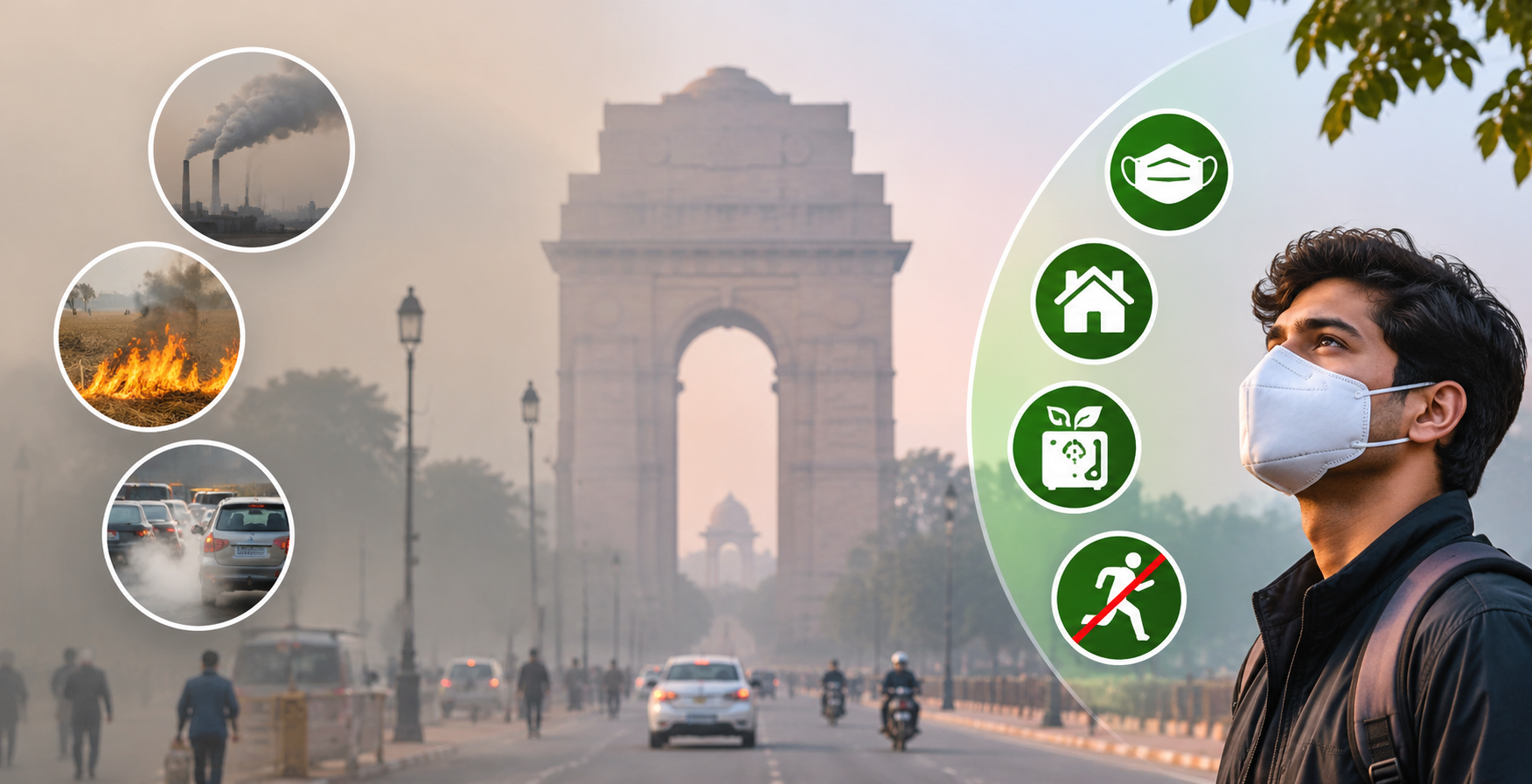
Delhi AQI Today: Latest Pollution Update
Delhi’s air quality deteriorated significantly around Diwali 2026.
NOVEMBER 7, 2026
364
Reported overall morning AQI
NOVEMBER 9, 2026
400+
Reported readings at several locations
On November 7, the city’s overall AQI was reported at 364 in the morning. By November 9, several locations were recording severe pollution, with readings exceeding 400.
Areas Experiencing Unhealthy Air Quality
Areas including Burari, Jahangirpuri, and parts of north and east Delhi experienced particularly unhealthy conditions.
However, AQI varies by location and time. A citywide average does not mean every neighborhood has identical pollution levels.
What Is AQI, and What Do Its Numbers Mean?
The Air Quality Index is a standardized measure used to communicate how polluted the air is.
India’s AQI system considers pollutants including particulate matter, nitrogen dioxide, sulphur dioxide, ozone, and carbon monoxide.
The higher the AQI, the greater the potential health concern.
AQI Categories in India
| AQI range |
Category |
General health concern |
| 0–50 |
Good |
Minimal impact |
| 51–100 |
Satisfactory |
Minor discomfort for sensitive individuals |
| 101–200 |
Moderate |
Discomfort for people with respiratory or heart conditions |
| 201–300 |
Poor |
Breathing discomfort with prolonged exposure |
| 301–400 |
Very Poor |
Respiratory illness risk with prolonged exposure |
| 401–500 |
Severe |
May affect healthy people and seriously impact vulnerable groups |
When Delhi’s AQI reaches 300 or above, residents should take outdoor exposure seriously.
Why Does Delhi Experience Severe Pollution in Winter?
Delhi’s winter pollution is caused by several interacting factors rather than one single source.
1. Vehicle Emissions
Delhi-NCR has heavy daily traffic, including private cars, buses, commercial vehicles, and freight movement.
Exhaust emissions contribute to the region’s pollution burden.
Congested roads and prolonged idling can worsen local exposure.
2. Road and Construction Dust
Dust from roads, construction sites, and uncovered materials contributes to particulate pollution.
Dry conditions and vehicle movement can keep particles suspended in the air.
3. Agricultural Burning
Seasonal crop-residue burning in parts of northern India can contribute to regional pollution, depending on wind direction and weather conditions.
Its contribution varies over time and should not be treated as the sole cause of Delhi’s air pollution.
4. Winter Weather Conditions
Low wind speeds, temperature inversions, and a shallow atmospheric mixing layer can trap pollutants closer to the ground.
This makes pollution episodes more persistent.
5. Firecracker Emissions
Firecrackers can cause short-term increases in particulate pollution.
Following Diwali on November 8, smoke and poor visibility were reported across several parts of Delhi-NCR.
However, the overall pollution episode reflects multiple emission sources combined with unfavorable weather conditions.
What Is GRAP Stage III in Delhi-NCR?
The Graded Response Action Plan (GRAP) is a framework for controlling air pollution as conditions deteriorate.
It introduces progressively stronger measures based on air quality and forecasts.
The CAQM invoked GRAP Stage III on November 6, 2026, before Diwali, as pollution levels approached the severe category.
Stage III measures operate alongside applicable restrictions from earlier stages.
Key Measures Under GRAP Stage III
Depending on the current official directions, measures include
- Restrictions on specified dust-generating construction and demolition activities
- Additional controls on polluting industrial and commercial activities
- Restrictions on certain older petrol and diesel vehicles in designated NCR districts
- Enhanced road-dust management
- School-related protective measures as directed by the relevant authorities
- Increased monitoring and enforcement of pollution-control requirements
Residents should check the latest CAQM orders because restrictions may be modified or withdrawn as conditions change.
Which Vehicles Face Restrictions Under GRAP Stage III?
Vehicle restrictions are particularly important for people commuting between Delhi, Noida, Gurugram, Ghaziabad, and Faridabad.
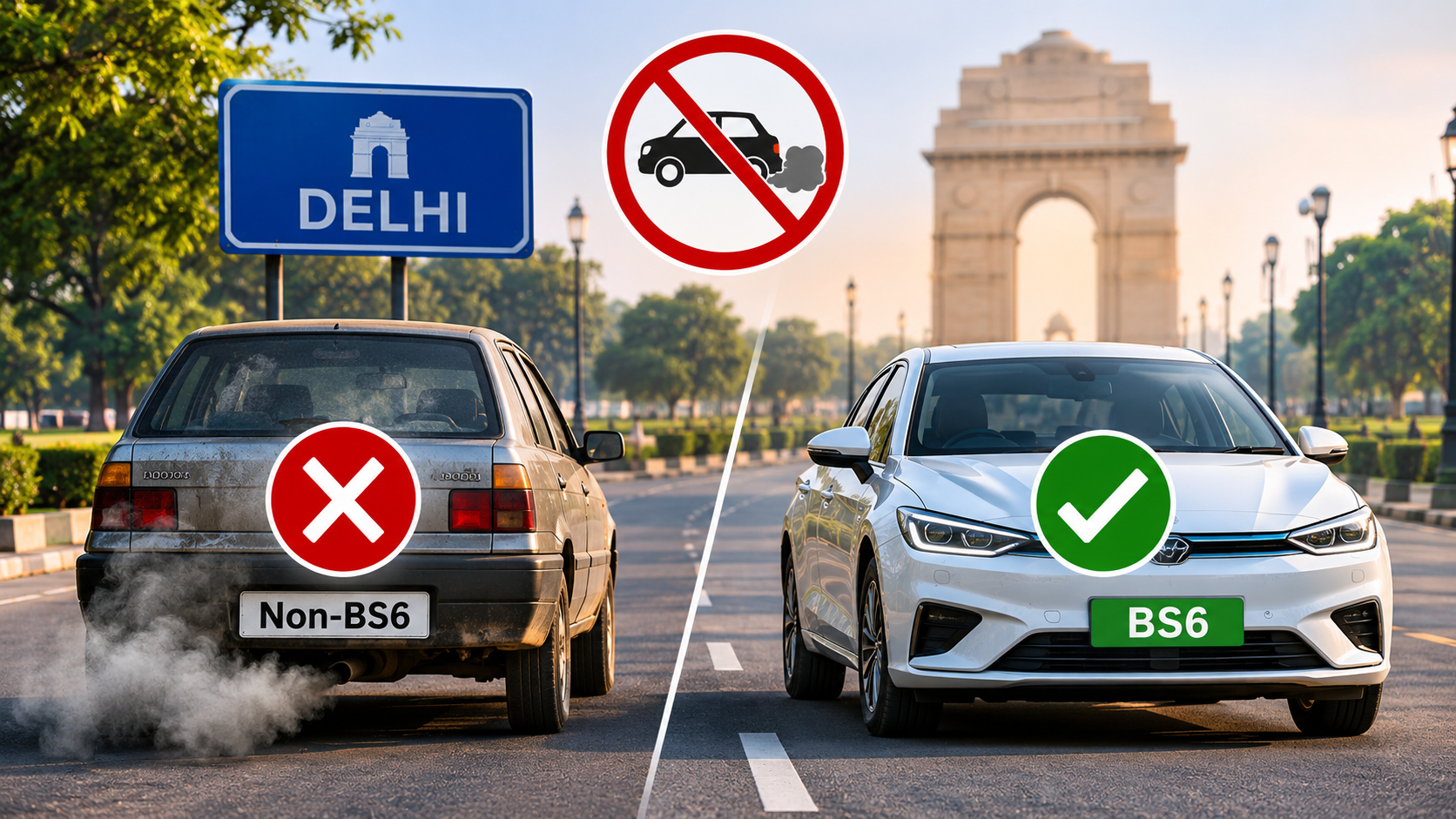
Under applicable GRAP Stage III provisions, BS-III petrol and BS-IV diesel four-wheelers face restrictions in Delhi and specified NCR districts, subject to notified exemptions.
These restrictions should not be confused with separate seasonal vehicle-entry rules.
What Should Car Owners Check?
Before travelling, verify:
- Your vehicle’s Bharat Stage emission standard
- Registration and insurance validity
- Applicable Pollution Under Control Certificate
- Whether your route passes through a restricted jurisdiction
- Current GRAP and Delhi Traffic Police directions
A valid PUC certificate does not automatically exempt a vehicle from an independently applicable restriction.
How Does Delhi AQI Pollution 2026 Affect Health?
Poor air quality can affect the respiratory and cardiovascular systems.
Fine particulate matter, particularly PM2.5, is concerning because these particles can travel deep into the lungs.
Common Symptoms
Exposure to polluted air may cause:
- Coughing and throat irritation
- Burning or watery eyes
- Breathing discomfort
- Wheezing
- Headaches or fatigue
- Worsening of existing respiratory symptoms
Children, older adults, pregnant people, and individuals with heart or lung conditions may face greater risks.
Anyone experiencing severe breathing difficulty, chest pain, or other urgent symptoms should seek immediate medical attention.
7 Practical Safety Tips During High AQI
When Delhi’s air quality reaches the Very Poor or Severe category, small changes can help reduce exposure.
1. Check AQI Before Going Outside
Review your area’s air quality rather than relying only on the citywide average.
2. Reduce Unnecessary Outdoor Activity
Limit prolonged outdoor exercise when pollution levels are very high, especially if you are sensitive to polluted air.
3. Use a Well-Fitting Respirator When Needed
A properly fitted N95 or equivalent particulate respirator can reduce exposure to airborne particles.
Ordinary cloth masks do not provide the same level of filtration.
4. Manage Indoor Air
Keep windows closed during periods of particularly poor outdoor air quality when practical, and consider suitable indoor air filtration.
Avoid indoor smoking, incense, or other activities that create additional particles.
5. Follow Medical Advice
People with asthma or other chronic conditions should follow their prescribed treatment plans and consult their healthcare professional about managing symptoms.
6. Avoid Open Burning
Do not burn leaves, rubbish, or other waste, which can add harmful emissions to the air.
7. Stay Updated on Government Advisories
Monitor official health and pollution-control announcements, especially during prolonged smog episodes.
Travel Tips During Delhi Winter Smog
Delhi AQI Pollution 2026 also creates challenges for people travelling to offices, airports, railway stations, and nearby NCR cities.
Smog and reduced visibility can make some journeys more difficult, particularly during early morning and late evening hours.
Allow Extra Travel Time
Plan reasonable buffers for important appointments and airport transfers.
Check Visibility and Traffic Conditions
Use official weather forecasts and traffic advisories before leaving.
Avoid Unnecessary Road Travel
Where practical, combine errands, use suitable public transport, and reduce avoidable journeys during severe pollution episodes.
Keep Vehicle Windows Closed in Heavy Traffic
When outdoor pollution is high, using the vehicle’s cabin filtration and recirculation settings appropriately may help reduce exposure.
Follow Road Safety Rules
Do not drive faster to compensate for delays. Use suitable lights in reduced visibility and maintain a safe following distance.
How Can Companies Protect Daily Office Commuters?
Air pollution is not only a household concern. It can also affect corporate transportation and employee commuting.
Businesses with employees travelling across Delhi-NCR should review their transport arrangements during severe pollution episodes.
Review Vehicle Compliance
Companies should confirm that vehicles used for employee transportation meet the applicable emission and registration requirements.
Communicate Schedule Changes
If pollution-related measures affect reporting times or routes, employees should receive clear updates.
Consider Flexible Working Arrangements
Where operationally possible, organizations may consider remote work or adjusted schedules during particularly severe pollution episodes.
Avoid Unnecessary Idling
Transport teams can encourage drivers to switch off engines during extended stationary periods where safe and practical.
Well-organised employee transportation can support reliable commuting, although shared transport does not eliminate exposure to air pollution.
How Indian Travel House Can Support Delhi-NCR Transportation
Winter pollution can make travel planning more complicated for families, corporate teams and regular commuters.
Indian Travel House provides chauffeur-driven transportation solutions for personal and corporate travel requirements.
Before confirming a booking, customers should check the assigned vehicle’s compliance with applicable GRAP rules, service availability and booking conditions.
A transportation service cannot remove pollution-related health risks, but careful vehicle selection and journey planning can help travellers manage their requirements more effectively.
Frequently Asked Questions
1. What is Delhi’s AQI on November 9, 2026?
The CAQM dashboard recorded an overall Delhi AQI of 372 at 1:00 AM, in the Very Poor category. Readings change throughout the day.
2. Is GRAP Stage III active in Delhi?
Yes. GRAP Stage III was invoked on November 6, 2026, and remained in force in the latest official information checked for this article.
3. Why is Delhi’s air quality worse after Diwali?
Firecracker emissions can contribute to short-term pollution spikes. Vehicle emissions, dust, regional pollution sources and winter weather also influence air quality.
4. Is AQI 400 dangerous?
AQI above 400 falls in India’s Severe category and can affect healthy individuals as well as people with existing medical conditions.
5. Are all diesel cars banned under GRAP Stage III?
No. Restrictions depend on emission standards, vehicle category, location and applicable exemptions.
6. How can office commuters reduce pollution exposure?
Check AQI readings, reduce unnecessary outdoor waiting, consider suitable respiratory protection and follow current transport advisories.
7. Where can I check Delhi’s live AQI?
Use official air-quality information from CAQM and CPCB, including monitoring-station readings.
Delhi AQI Pollution 2026 highlights the serious air-quality challenges faced by the national capital during winter.
With Delhi’s AQI in the Very Poor category on November 9 and several monitoring stations recording Severe conditions, residents should remain informed and take practical precautions.
Understanding AQI levels, following GRAP restrictions, reducing unnecessary exposure and planning journeys carefully can help people respond more effectively to pollution episodes.
For businesses, reviewing employee transportation arrangements and vehicle compliance is also important during periods of heightened restrictions.
Planning travel across Delhi-NCR?
Explore chauffeur-driven transportation options through Indian Travel House and confirm vehicle compliance before booking.
Cleaner air requires sustained action from authorities, businesses and residents—not only during Diwali, but throughout the year.