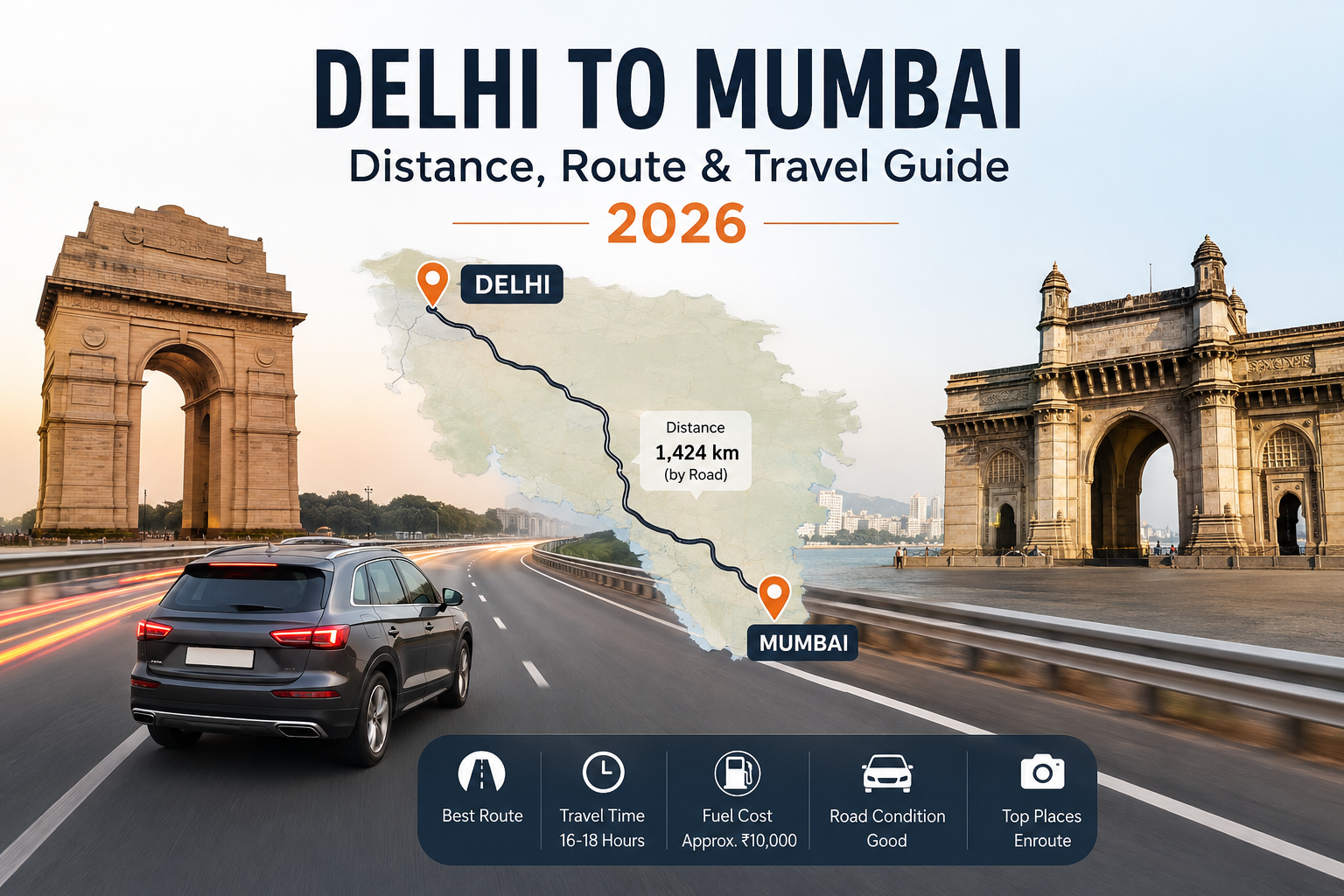
The Delhi to Mumbai distance is approximately 1,350 to 1,500 km by road, depending on the route, starting point, and destination within the two cities. Delhi and Mumbai are among India’s most important cities, connecting the country’s political capital with its financial and commercial hub.
Travellers can cover the Delhi to Mumbai route by car, train, bus, or flight. The best option depends on your budget, available time, comfort preferences, and purpose of travel. A flight is the fastest option, while trains can be more economical for long-distance travel. Travelling by road is a practical choice for travellers who want flexibility, multiple stops, or a longer road-trip experience.
If you are planning a journey between the two cities, this Delhi to Mumbai travel guide 2026 covers the approximate distance, travel time, major road routes, transportation options, places to stop, and useful road-trip tips.
Distance, travel time, and transportation options for planning your journey
The Delhi to Mumbai distance by road is generally around 1,350–1,500 km, depending on the route used. Different navigation platforms can show slightly different distances because the actual route changes according to the starting location, destination, road conditions, and available expressway sections.
For example, current route data can show a road distance of around 1,400 km for the Delhi–Mumbai corridor. Travellers should therefore treat the distance as approximate rather than relying on one fixed figure.
Note: Actual travel time can change because of traffic, weather, road conditions, stops, train schedules, and flight operations.
The Delhi to Mumbai travel time depends largely on the mode of transportation.
By flight, the actual flying time is generally around two to two and a half hours, although the complete journey takes longer when airport transfers, check-in, security, and baggage collection are included.
Train journeys generally take around 15–20 hours or longer depending on the specific service and route. Some overnight trains can be convenient because passengers can travel while sleeping.
By road, the journey can take approximately 18–24 hours of driving time under favorable conditions, but a long-distance road trip should ideally be divided into multiple sections rather than attempting to drive continuously.
Choose your travel mode based on your available time, comfort, budget, and overall journey plan.
Routes, stopovers, and travel options for a long-distance road journey
The traditional Delhi to Mumbai road route follows major national highways through parts of Rajasthan, Gujarat and Maharashtra.
Another routing can use newer expressway sections and different highway connections depending on current road conditions and navigation recommendations.
The Delhi–Mumbai Expressway provides a major access-controlled road corridor between Delhi and Mumbai. Travellers should check the latest route and operational sections before starting their journey.
The Delhi–Mumbai Expressway has been opening in sections, providing additional access-controlled road connectivity along the corridor. Because sections and connections can change over time, travelers should check the latest route information before beginning a long road journey.
The exact route selected by navigation applications may also vary according to traffic, road closures, diversions, and the final destination in Mumbai.
Travelling from Delhi to Mumbai by car gives you significantly more flexibility than flying or taking a scheduled train.
You can decide your departure time, stop for meals, take breaks, and include destinations along the way. This makes a private car particularly useful for families, groups, and travellers planning a road trip rather than simply reaching Mumbai as quickly as possible.
However, the journey is very long. Travellers should avoid driving continuously for excessive hours and should plan suitable rest stops or overnight stays.
For a comfortable journey, consider dividing the trip into two days or more. Jaipur, Udaipur, Ahmedabad, and Vadodara can be considered as potential stopover destinations depending on your chosen route and itinerary.
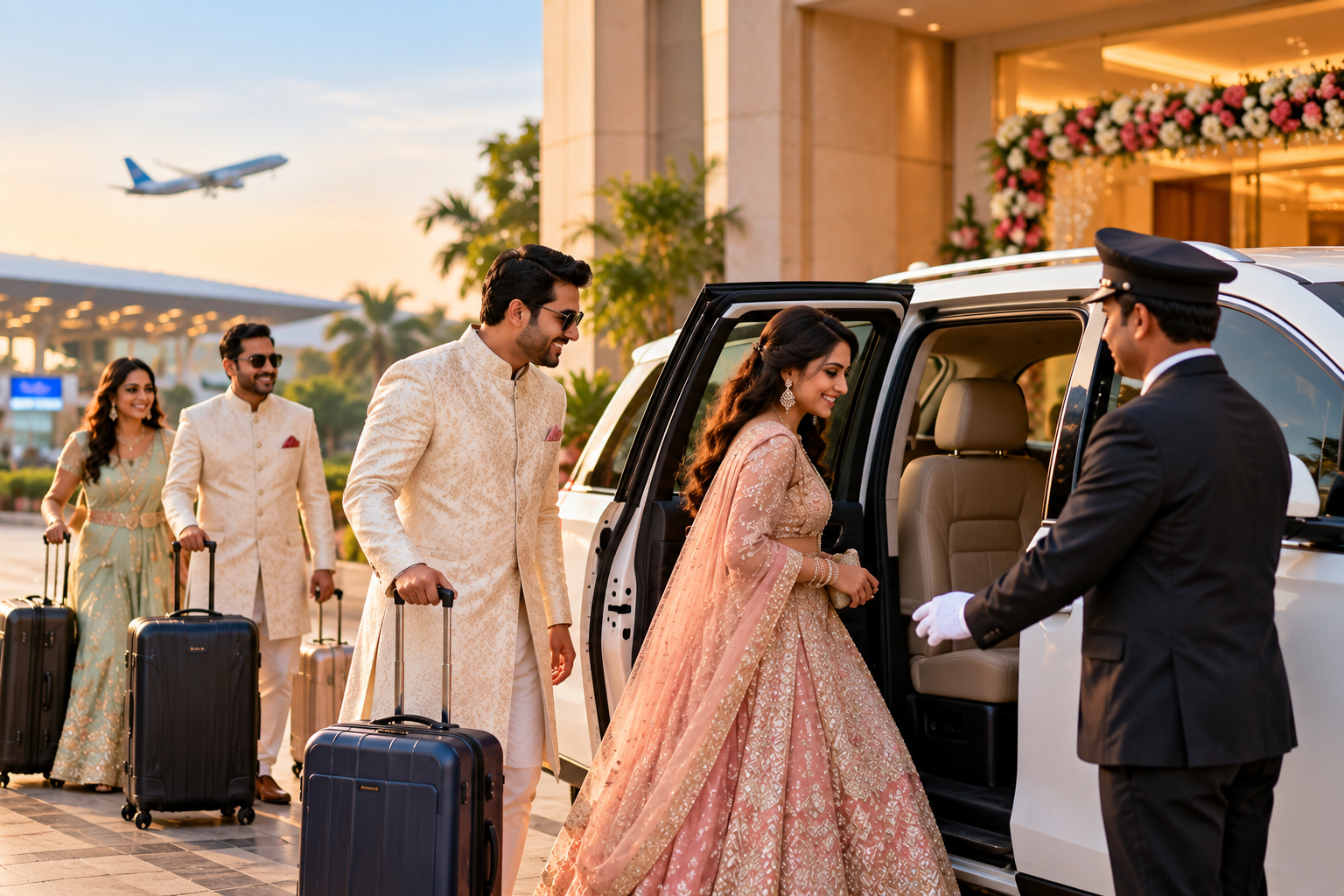
For travellers who want the flexibility of a private car without driving for such a long distance, a chauffeur-driven car rental can be a convenient option.
With a professional driver, passengers can relax during the journey, work while travelling, or spend time with family instead of concentrating on highway driving.
A chauffeur-driven vehicle can also be useful when the journey includes multiple destinations. For example, a traveller could plan a route from Delhi through Jaipur, Udaipur, and Ahmedabad before reaching Mumbai.
For families and groups carrying luggage, private transportation can also provide greater control over departure times and stops.
Travellers can explore.
car rental services in India
when planning a private intercity journey.
Train travel is one of the popular options for the Delhi to Mumbai journey, particularly for passengers who want to avoid the long road journey.
Depending on the train and schedule, the journey generally takes around 15–20 hours or more. Overnight trains can be particularly convenient because passengers can cover a significant part of the distance while sleeping.
Train travel can be suitable for solo travelers, couples, and passengers who prefer rail transportation.
Before travelling, check the latest train schedule, boarding station, seat availability, and arrival station because services and timings can vary.
If your main priority is saving time, flying is generally the fastest way to travel between Delhi and Mumbai.
Direct flights typically have around two to two and a half hours of flying time. However, travellers should also account for transportation to the airport, check-in, security procedures, boarding, and the journey from Mumbai airport to the final destination.
Business travellers
Short trips
Time-sensitive journeys
Meetings or events
Time-conscious travelers
Delhi’s Indira Gandhi International Airport and Mumbai’s Chhatrapati Shivaji Maharaj International Airport provide major air connectivity between the two cities.
Buses are another transportation option, although the long distance makes the journey considerably longer than flying and potentially less flexible than travelling by private car.
Bus travel may suit passengers looking for a public transportation option and travelers who prefer not to drive.
Travel time can vary considerably depending on the operator, route, traffic, and scheduled stops. Some services can take more than 24 hours.
Check the boarding point, drop-off location, bus type, travel duration, luggage policy, and cancellation conditions.
Road travel offers flexibility, trains provide an overnight-friendly option, flights save time, and buses offer another public transport choice.
Turn a long-distance journey into a memorable multi-city road trip
One of the advantages of travelling by road is the opportunity to turn a long-distance journey into a multi-city trip.
Explore some of Mumbai’s most popular attractions after completing the Delhi to Mumbai journey.
The Gateway of India is one of Mumbai’s best-known landmarks and is located near the waterfront in South Mumbai.
Marine Drive is famous for its coastal views and is particularly popular around sunset and in the evening.
This historic railway station is an important architectural and heritage landmark in the city.
Siddhivinayak Temple is one of Mumbai’s prominent temples and attracts devotees throughout the year.
Colaba is popular for its heritage buildings, shopping, restaurants, and proximity to the Gateway of India.
A Delhi to Mumbai road trip requires more preparation than a short intercity journey.
Starting early can help you cover the initial part of the route before peak traffic becomes heavier.
Avoid treating the journey as a continuous drive. An overnight stop can reduce fatigue and make the trip considerably more comfortable.
Highway conditions, diversions, and expressway availability can change. Check the latest navigation information before starting.
Although major highways have fuel stations and food stops, it is still sensible to plan important breaks rather than relying entirely on finding a stop at the last moment.
Keep drinking water, chargers, identification documents, basic medicines, and other travel essentials accessible during the journey.
Weather can affect road travel, particularly during monsoon and winter periods. Fog in northern India and heavy rain in parts of western India can increase travel time.
The best transportation option depends on your priorities.
If the purpose of your journey is simply to reach Mumbai quickly, flying is usually the most practical choice.
If you want to save money and are comfortable with a longer journey, train travel can be a good option.
If your trip includes sightseeing, multiple stops, or family travel, a private car can provide considerably more flexibility.
Choose your travel season based on weather, road conditions, and sightseeing plans.
Delhi and Mumbai can be connected throughout the year, but the best travel period depends on your preferred travel experience.
October to March is generally comfortable for sightseeing and long-distance road travel, although winter conditions around Delhi can sometimes affect visibility.
April to June can be hot, particularly across Rajasthan and parts of Gujarat. Travellers planning a road trip should stay hydrated and avoid unnecessary daytime exposure.
July to September is the monsoon period. Rain can affect road conditions and travel times, particularly in parts of Maharashtra and other regions along the route.
Always check current weather and traffic conditions before beginning a long road journey.
Yes, the journey can be an interesting road trip for travelers who enjoy long-distance driving and want to experience multiple parts of western and central India.
However, the Delhi to Mumbai distance is substantial, so the trip requires proper planning.
Instead of trying to complete the entire journey in one continuous drive, consider creating a two- or three-day itinerary with suitable overnight stops.
A private chauffeur-driven car can be especially useful for families, groups, and travelers who want to explore destinations along the route without driving themselves.
The approximate Delhi to Mumbai distance by road is 1,350–1,500 km, depending on the selected route and starting and ending points.
The journey can take approximately 18–24 hours or more of driving time, depending on the route, traffic, road conditions, and stops. A multi-day journey is more comfortable for most travellers.
Flying is generally the fastest option, with direct flight times of around two to two and a half hours. The total door-to-door journey takes longer because of airport procedures and transfers.
Train travel generally takes around 15–20 hours or longer depending on the train and route.
Yes, especially if you want to combine the journey with destinations such as Jaipur, Udaipur, Ahmedabad, or Vadodara. However, the long distance means that proper rest and route planning are important.
Yes. A chauffeur-driven private car can be considered if you want the flexibility of road travel without driving the entire distance yourself.
The Delhi to Mumbai distance makes this one of India’s major long-distance travel corridors. With a road distance of approximately 1,350–1,500 km, travellers have several ways to complete the journey, including car, train, bus, and flight.
Flying is the most time-efficient option, while trains can provide a comfortable overnight journey. Travelling by car is better suited to passengers who want flexibility, private transportation, and the opportunity to explore destinations along the route.
For families, groups, and travellers planning a multi-city itinerary, a chauffeur-driven car can make the journey more convenient by allowing flexible stops and route planning.
Before starting your journey, check the latest traffic, weather, and route conditions, especially if you are travelling by road. With the right planning, the Delhi to Mumbai journey can become more than simply a transfer between two cities—it can also be an opportunity to explore some of India’s major destinations along the way.
Delhi → Jaipur → Udaipur → Ahmedabad → Vadodara → Mumbai