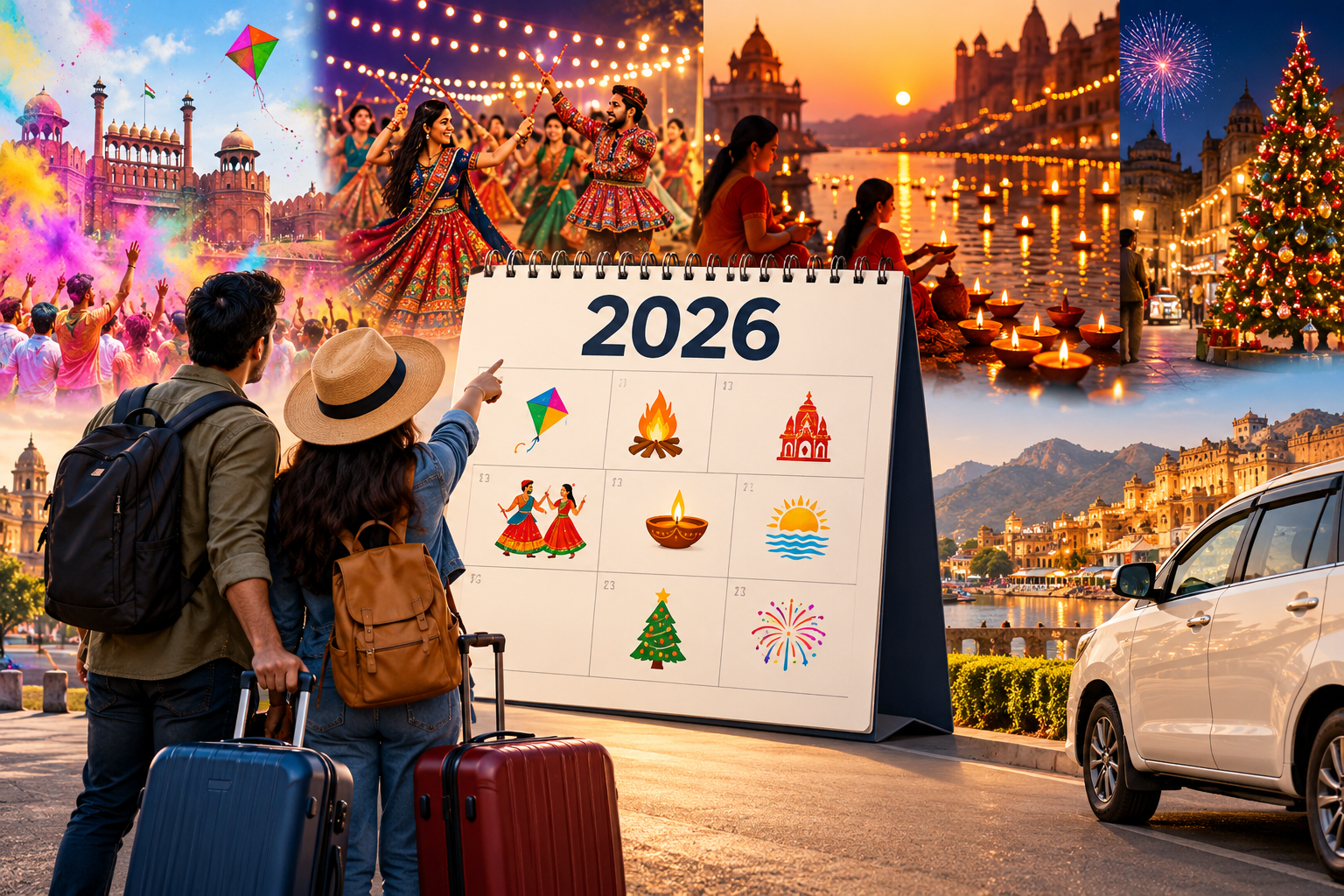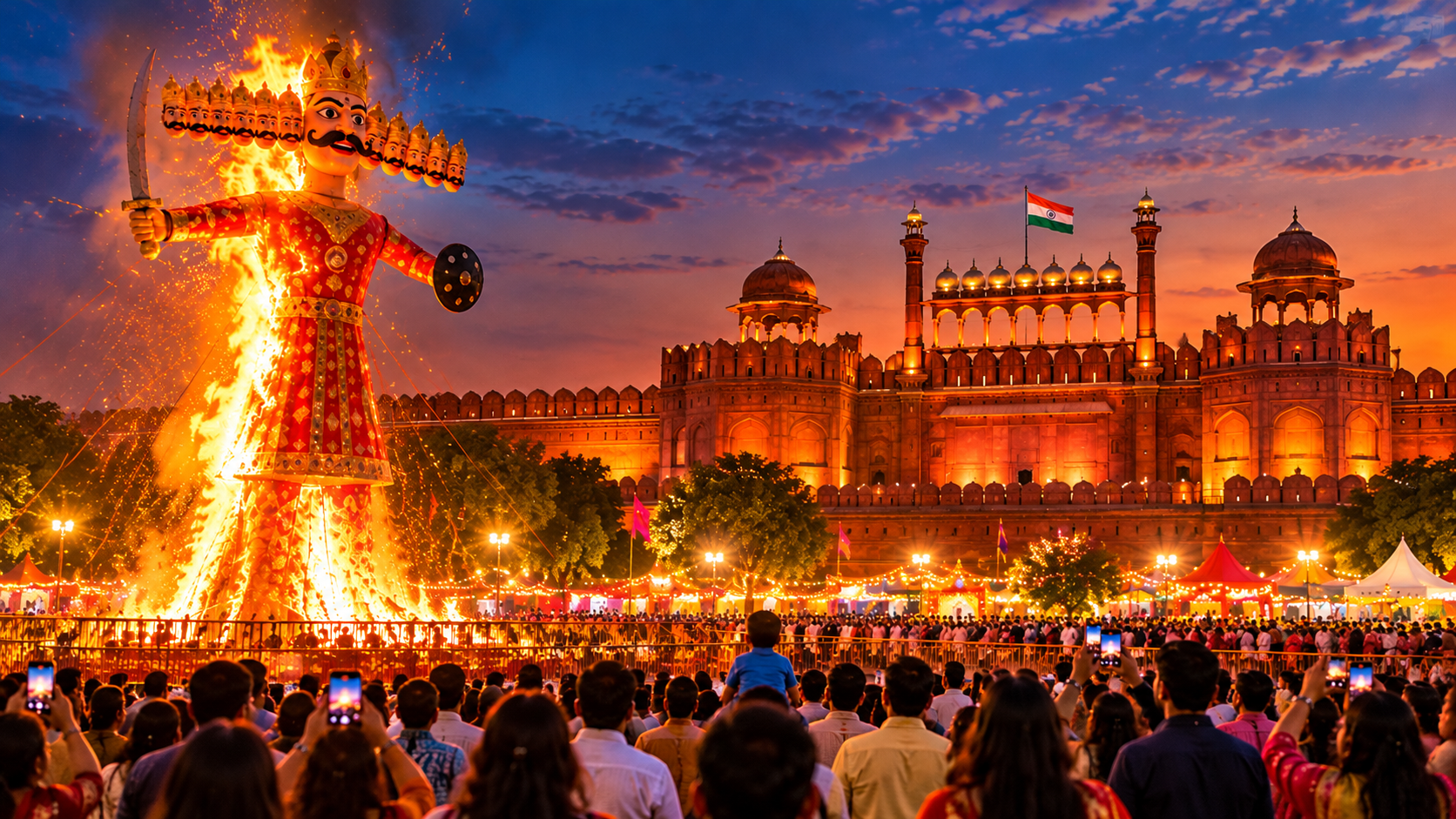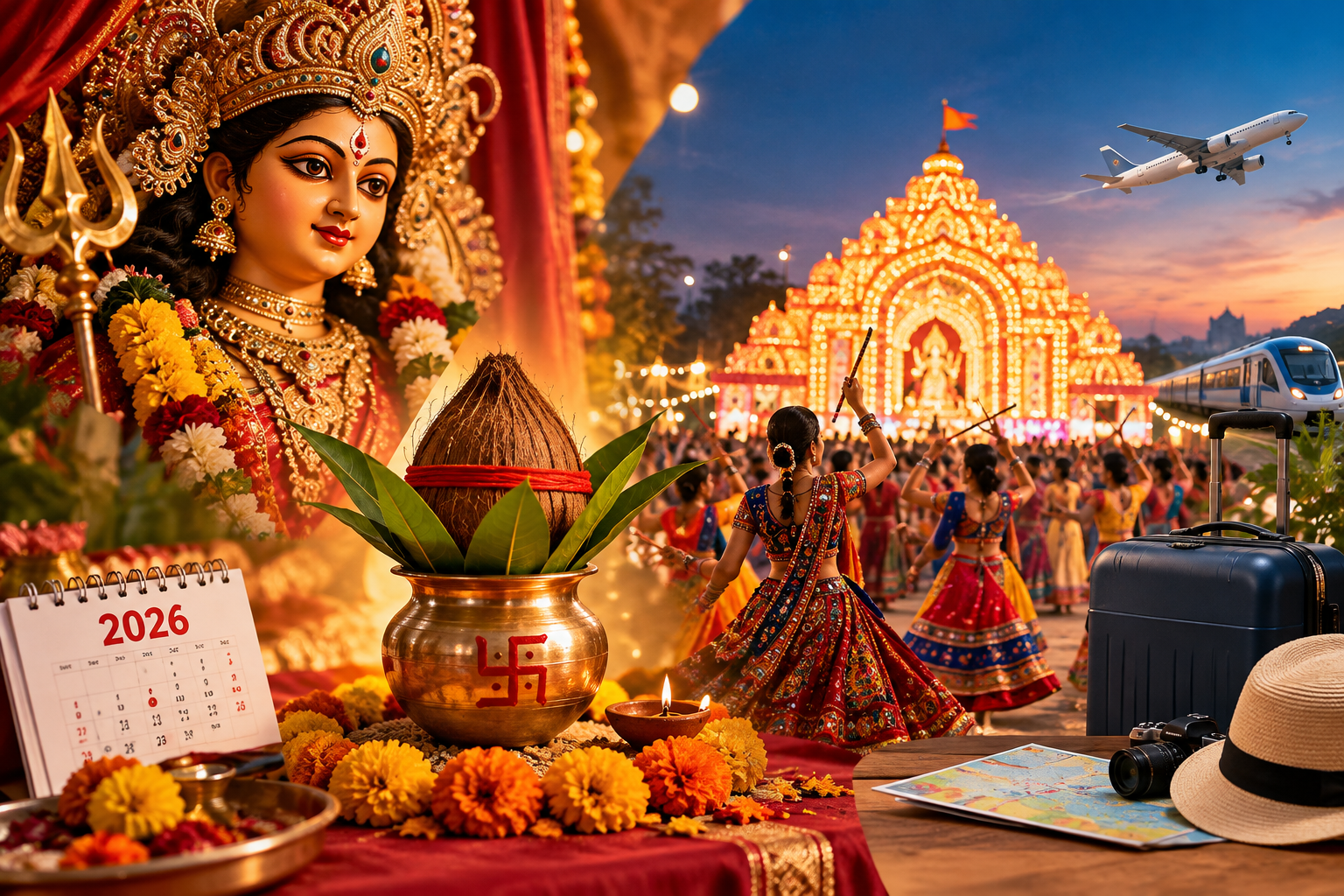
Navratri 2026 is one of the most widely celebrated Hindu festivals in India, bringing together religious traditions, cultural celebrations, Garba, Dandiya, and community events across the country. Sharad Navratri is observed for nine days and is dedicated to the worship of Goddess Durga and her different forms.
In 2026, Navratri begins on October 11 and continues through October 19, followed by Vijayadashami on October 20. From Ghatasthapana and the nine days of worship to colorful pandals, Garba nights, and Durga Puja celebrations, different parts of India celebrate Navratri in their own unique ways.
In this guide, you will find Navratri 2026 dates, Ghatasthapana information, the significance of the nine days, famous pandal celebrations, and useful travel tips to help you plan your festive season.
Sharad Navratri 2026 will be observed over nine sacred days.
followed by Vijayadashami on October 20.
The nine days of Sharad Navratri are observed according to the Hindu lunar calendar.
Each day is associated with a different form of Goddess Durga and has its own religious significance.
| Day | Date | Tithi | Main Puja |
|---|---|---|---|
| Day 1 | October 11, 2026 | Pratipada | Ghatasthapana & Maa Shailputri |
| Day 2 | October 12, 2026 | Dwitiya | Maa Brahmacharini |
| Day 3 | October 13, 2026 | Tritiya | Maa Chandraghanta |
| Day 4 | October 14, 2026 | Chaturthi | Maa Kushmanda |
| Day 5 | October 15, 2026 | Panchami | Maa Skandamata |
| Day 6 | October 16, 2026 | Shashthi | Maa Katyayani |
| Day 7 | October 17, 2026 | Saptami | Maa Kalaratri |
| Day 8 | October 18, 2026 | Ashtami | Durga Ashtami |
| Day 9 | October 19, 2026 | Navami | Maha Navami |
| Day 10 | October 20, 2026 | Dashami | Vijayadashami |
Sharad Navratri 2026 begins on October 11, followed by Durga Ashtami.
on October 18, Maha Navami; on October 19, and Vijayadashami on October 20.
Sharad Navratri 2026 begins on October 11 and concludes with Vijayadashami on October 20.
Explore the nine days, Navadurga forms, and Ghatasthapana details.
The nine days of Sharad Navratri are observed according to the Hindu lunar calendar.
Each day is associated with a different form of Goddess Durga and has its own religious significance.
The 2026 Sharad Navratri calendar includes nine days of Navadurga worship followed by
Vijayadashami. Here is the complete day-wise schedule:
Ghatasthapana is one of the most important rituals performed at the beginning.
of Sharad Navratri. It marks the formal beginning of the Navratri celebrations and involves
establishing a sacred kalash as part of the worship of Goddess Shakti.
Muhurat timings can vary by location, so people should check the Panchang for their city.
before performing the ritual. Ghatasthapana is generally performed during the early part
of the day while Pratipada Tithi is prevailing.
Each day of Navratri is associated with a form of Goddess Durga, commonly known as the
Navadurga. The nine forms are traditionally worshipped during the festival.
Day 1 — Maa Shailputri
The first day begins with Ghatasthapana and worship of Maa Shailputri.
Day 2 — Maa Brahmacharini
The second day is dedicated to Maa Brahmacharini and is associated with devotion, discipline, and spiritual strength.
Day 3 — Maa Chandraghanta
Maa Chandraghanta is worshipped on the third day. Her form is associated with courage and peace.
Day 4 — Maa Kushmanda
The fourth day is dedicated to Maa Kushmanda.
Day 5 — Maa Skandamata
Devotees worship Maa Skandamata on the fifth day of Navratri.
Day 6 — Maa Katyayani
The sixth day is dedicated to Maa Katyayani.
Day 7 — Maa Kalaratri
Maa Kalaratri is worshipped on the seventh day.
Day 8 — Maa Mahagauri
The eighth day is associated with Durga Ashtami and the worship of Maa Mahagauri.
Day 9 — Maa Siddhidatri
The ninth day is associated with Maha Navami and Maa Siddhidatri.
Explore Navratri pandals, famous celebration cities, Garba and Dandiya events, important dates, and practical travel tips for 2026.
Navratri is one of India’s most widely celebrated festivals, bringing together religious traditions, cultural programs, music, dance, and community celebrations. During the festive period, many cities organize decorated pandals, Durga Puja events, Garba nights, and Dandiya programs.
Because popular venues can become crowded, planning your route, parking, and transportation in advance can make festival travel more convenient.
During Navratri and the wider festive season, temporary pandals are created at many locations for religious ceremonies and community celebrations. A pandal may feature a decorated worship area, an idol or image of the deity, lighting, artistic decorations, and arrangements for devotees.
In different parts of India, the style of celebration varies. Some cities are particularly known for large-scale Durga Puja celebrations, while Gujarat is famous for Garba and Dandiya events during Navratri.
Delhi hosts a variety of Navratri and Durga Puja celebrations across different neighborhoods, with decorated pandals, cultural programs, and religious events.
Kolkata is widely known for elaborate Durga Puja celebrations, artistic pandals, beautifully decorated idols, and large community events.
Mumbai hosts numerous Navratri and Durga Puja events and is also known for large Garba and Dandiya celebrations.
Ahmedabad is particularly famous for its Garba celebrations, with venues across the city hosting traditional and modern Garba and Dandiya events.
Jaipur sees Navratri celebrations, religious programs, and cultural events. Visitors should allow additional time for traffic and crowds.
Lucknow also hosts Navratri and Durga Puja celebrations at community venues, with religious gatherings, decorations, and cultural programs.
Garba and Dandiya are among the most popular cultural celebrations associated with Navratri, particularly in Gujarat and other parts of western India.
Garba is traditionally performed in a circle around a central lamp or an image representing the divine feminine.
Dandiya involves rhythmic dancing with decorated sticks and is now organized at large venues across many Indian cities.
People attending these events should check venue timings, entry requirements, and transportation arrangements in advance, particularly for popular evening events.
Navratri is a busy travel period in many cities. Popular religious and cultural venues can become crowded, especially during evenings and on Ashtami and Navami.
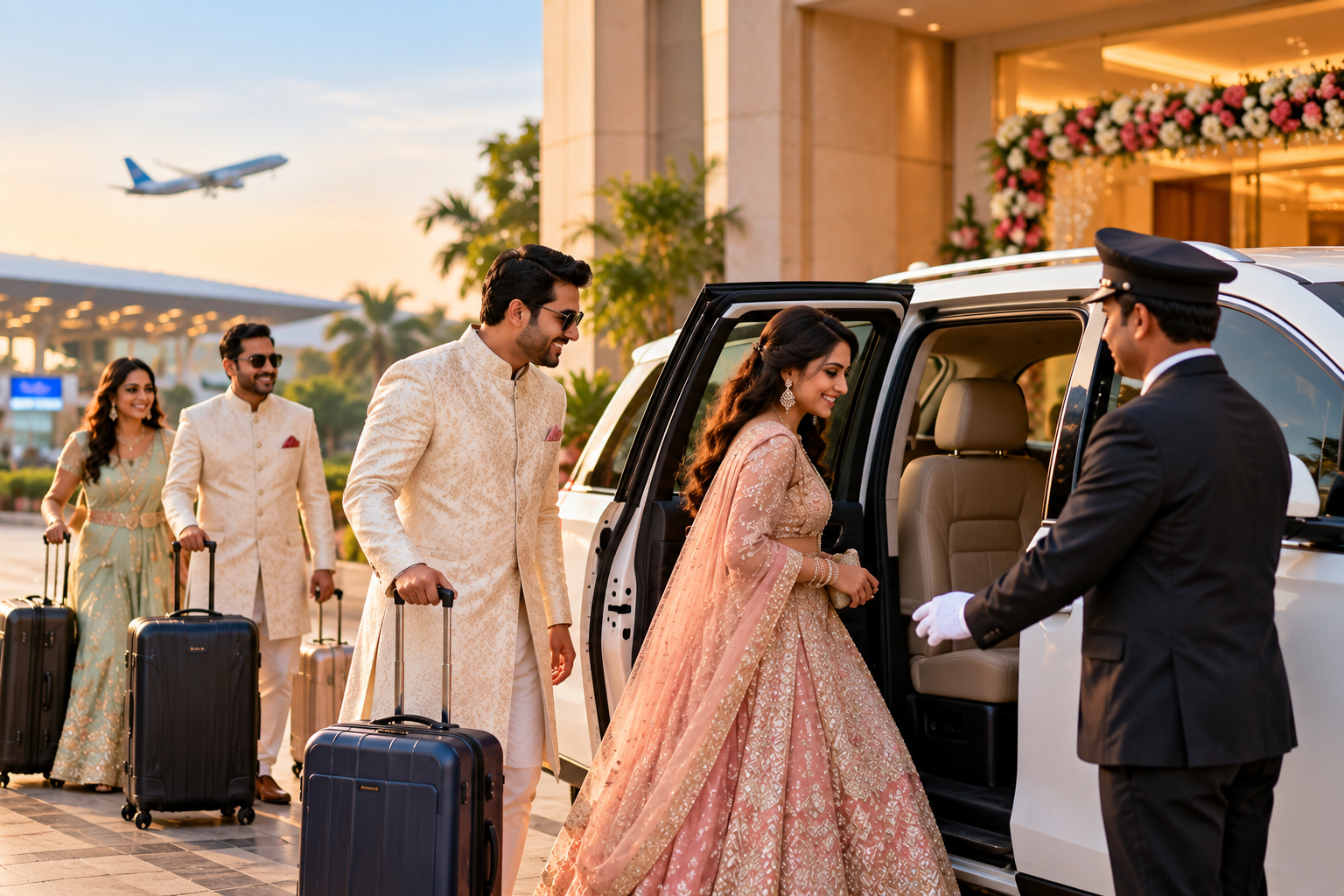
Visitors planning a Navratri trip can consider car rental services in India for convenient travel between airports, hotels and festival venues.
For airport pickups and drop-offs, airport transfer services can be useful, especially when travelling during busy festival periods.
Festival celebrations can change normal traffic patterns in busy areas. Temporary road restrictions, crowded markets, parking limitations, and increased demand for transportation may affect travel times.
If you are visiting another city specifically for Navratri celebrations, it is useful to plan the main attractions and festival venues in advance. This is particularly important when travelling with family, elderly passengers, or larger groups.
Advance planning can help reduce delays between airports, hotels, offices, and event venues during the festive period.
Sharad Navratri begins on October 11, 2026, with Ghatasthapana and the first day of Navratri.
Ghatasthapana is on October 11, 2026. The exact Muhurat varies by location. For Delhi, the listed Muhurat is 6:19 AM to 10:12 AM.
The main Sharad Navratri observance lasts nine days, from October 11 through October 19, followed by Vijayadashami on October 20.
Durga Ashtami falls on October 18, 2026, according to the referenced Navratri calendar.
Maha Navami falls on October 19, 2026.
Vijayadashami is observed on October 20, 2026, following the nine-day Navratri period.
Ahmedabad is particularly known for Garba and Dandiya, while Kolkata is widely known for Durga Puja. Delhi, Mumbai, Jaipur, and Lucknow also host a variety of Navratri and Durga Puja celebrations.
Navratri brings together religious traditions, cultural celebrations, music, dance, and community events across India. Whether you are visiting a famous pandal, attending a Garba night, or travelling to another city for the festival, planning your transportation in advance can make the journey more comfortable.