Corporate Transportation Services are no longer just about moving employees from one office location to another. In cities like Bangalore, where traffic congestion and unpredictable weather can easily turn a one-hour commute into a two-hour journey, businesses are starting to look at transportation very differently.
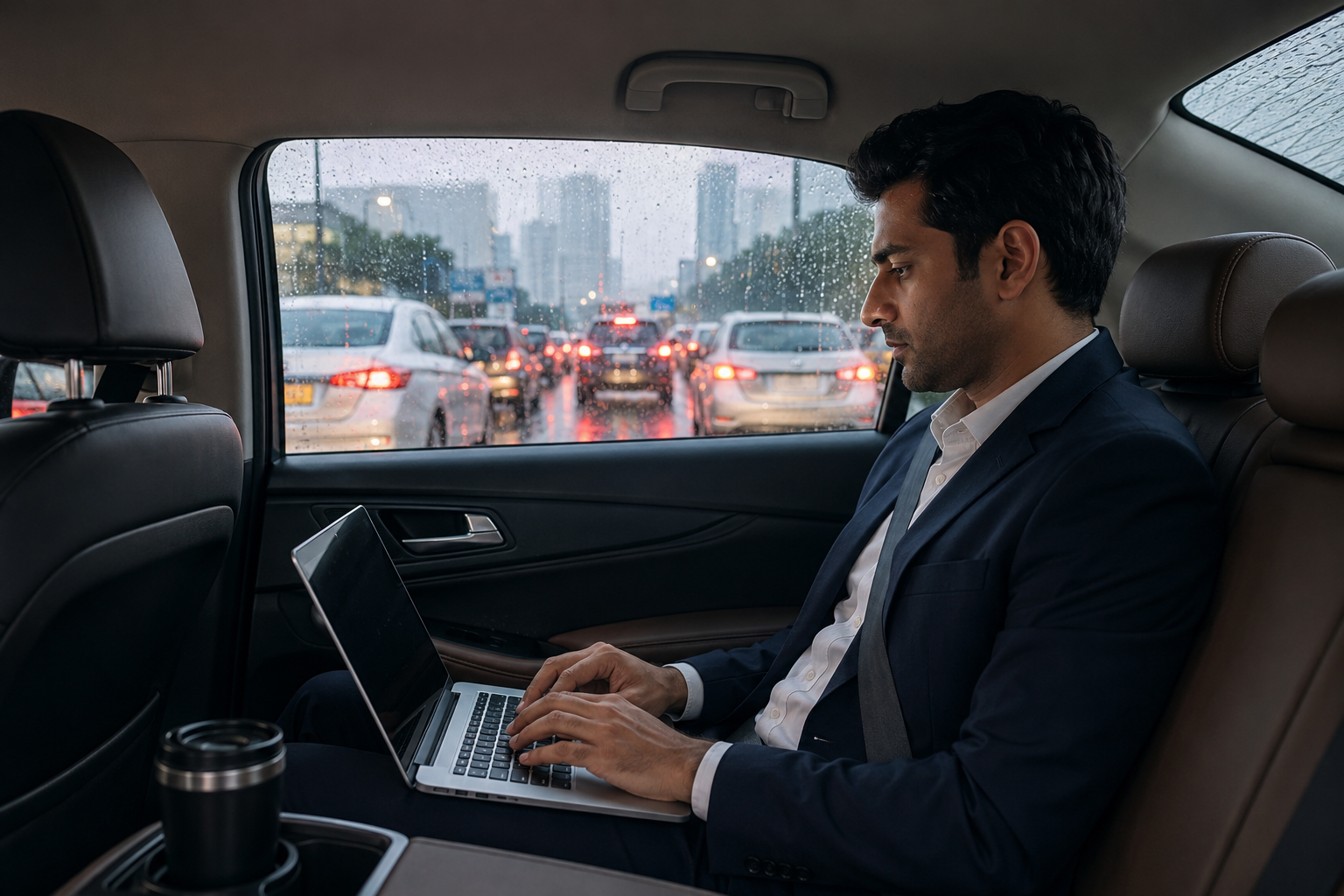
It is 8:20 on a rainy Tuesday morning in Bangalore. A sales manager is travelling from Electronic City to Whitefield for a client presentation scheduled at 9:30 AM. Under normal conditions, the journey takes less than an hour. Today, because of heavy rain and peak-hour traffic, Google Maps shows almost two hours.
A few years ago, this situation would have meant rescheduling the meeting or arriving stressed and unprepared. Instead, the employee opens the laptop, connects to the internet, reviews the presentation, and joins the client call directly from the back seat of the vehicle. By the time the cab reaches the office, some of the most important work of the day is already complete.
Bangalore residents often joke that distances in the city are measured in minutes rather than kilometers. A location that appears close on a map can sometimes take more than an hour to reach during peak traffic. Add rain to the equation and travel times become even more unpredictable.
For businesses, however, traffic is no longer simply an employee inconvenience. Delayed arrivals affect meetings, client calls, approvals, and project timelines. One employee getting stuck in traffic may delay an entire team waiting for decisions or updates.
As companies continue expanding across technology parks in Whitefield, Electronic City, Manyata Tech Park, and Outer Ring Road, transportation is slowly becoming part of business continuity planning rather than just an operational requirement.
Traffic congestion and urban mobility challenges continue to be major concerns for Indian cities according to studies and policy recommendations released by NITI Aayog.
The concept of a mobile office sounded futuristic just a few years ago. Today, it has quietly become normal for thousands of professionals working across India’s largest cities.
Review presentations while travelling to airports and business meetings.
Approve budgets and workflows while moving between client locations.
Prepare proposals and presentations during city travel.
The modern workday no longer begins after reaching the office reception area. In many cases, it begins during the commute itself.
This shift is transforming the way businesses think about transportation, employee experience, and workplace productivity.
Driving through Bangalore traffic requires concentration. Employees navigating crowded roads need to focus on signals, diversions, navigation, and parking. By the time they finally reach the office, they have already spent a considerable amount of energy simply getting there.
The experience changes completely when someone else handles the driving.
Sitting in the back seat of a professionally managed corporate vehicle allows employees to review reports, prepare for meetings, clear pending emails, or simply arrive more relaxed and focused.
The driver focuses on the road while the employee focuses on work. That simple difference creates more value than many organizations realize.
Many organizations also integrate Corporate Car Rental Services and Executive Car Rental solutions for senior management and business travel requirements.
Every Bangalore professional knows what happens when it rains. A commute that normally takes forty-five minutes suddenly becomes a ninety-minute journey. Airport transfers become unpredictable and schedules begin shifting throughout the day.
Deadlines, however, do not slow down with the traffic. Clients still expect responses, presentations still need to happen, and decisions still need approvals.
Corporate transportation services help businesses maintain continuity during these situations by allowing employees to continue working even while travelling.
The roads may slow down, but productivity does not necessarily have to slow down with them.
Companies are usually very good at tracking transportation costs. Fuel expenses, maintenance costs, insurance renewals, and driver salaries are all carefully monitored.
What often goes unnoticed is the cost of lost productivity.
Imagine an organization employing 250 people where every employee loses just forty-five minutes every working day because of traffic-related delays. Over the course of a month, that represents thousands of productive work hours that simply disappear.
When multiplied across an entire year, the numbers become large enough to influence profitability, customer service, and project delivery timelines.
Corporate transportation services help businesses recover part of that lost time by transforming commuting into productive work hours.
Many organizations invest heavily in office infrastructure, employee engagement programs, and workplace culture initiatives. However, the employee experience often begins much earlier than companies realize.
It starts when employees leave home.
A stressful commute can affect mood, energy levels, and productivity long before the first meeting of the day begins. Employees who spend hours dealing with traffic often arrive mentally exhausted before they even open their laptops.
Reducing commute stress has therefore become an important part of improving employee wellbeing and overall job satisfaction.
Candidates today evaluate employers differently than they did a decade ago. Salary and career growth remain important, but convenience, flexibility, and work-life balance are becoming equally important factors.
Recruitment teams increasingly receive questions about transportation support, shift travel arrangements, and employee safety policies.
This is especially true for women employees, night-shift teams, and professionals travelling long distances every day.
Organizations offering reliable corporate transportation solutions often gain an advantage in attracting and retaining talent in highly competitive markets.
Hybrid work has changed how businesses think about employee mobility. Many employees now travel to offices only a few times each week, but when they do travel, organizations want those journeys to be efficient and productive.
Employees use commuting time to prepare for presentations, review reports, or organize priorities for the day ahead.
As hybrid work continues growing, transportation is increasingly becoming part of productivity strategy rather than simply logistics management.
The journey to work is becoming an extension of the workplace itself.
Modern corporate transportation services are supported by technology that improves both employee experience and operational efficiency.
GPS Tracking
Employees know exactly when their vehicle will arrive.
Route Optimization
Helps reduce delays and improve fleet utilization.
Driver Verification
Improves safety, accountability, and trust.
Digital Trip Management
Provides better visibility and communication.
Digital trip management systems provide organizations with better visibility into transportation operations while improving communication between employees and transport teams.
As urban mobility continues evolving, transportation initiatives promoted by the Ministry of Road Transport and Highways and discussions around future mobility by NITI Aayog continue shaping transportation strategies across India.
Businesses investing in smarter mobility solutions are also increasingly adopting modern employee transportation services supported by GPS tracking and route optimization technologies.
Bangalore may be the most visible example of commuting challenges, but it is certainly not the only city experiencing them.
Mumbai continues dealing with increasing travel times between business districts. Hyderabad’s rapid expansion is creating new transportation pressures. Pune, Chennai, and Delhi NCR are witnessing similar patterns as offices continue moving further away from residential areas.
The challenge facing Bangalore today is likely to become the challenge facing most major Indian cities tomorrow.
Businesses preparing for that future are already investing in smarter mobility solutions.
The phrase “second office” sounds futuristic, but for many professionals it has already become reality.
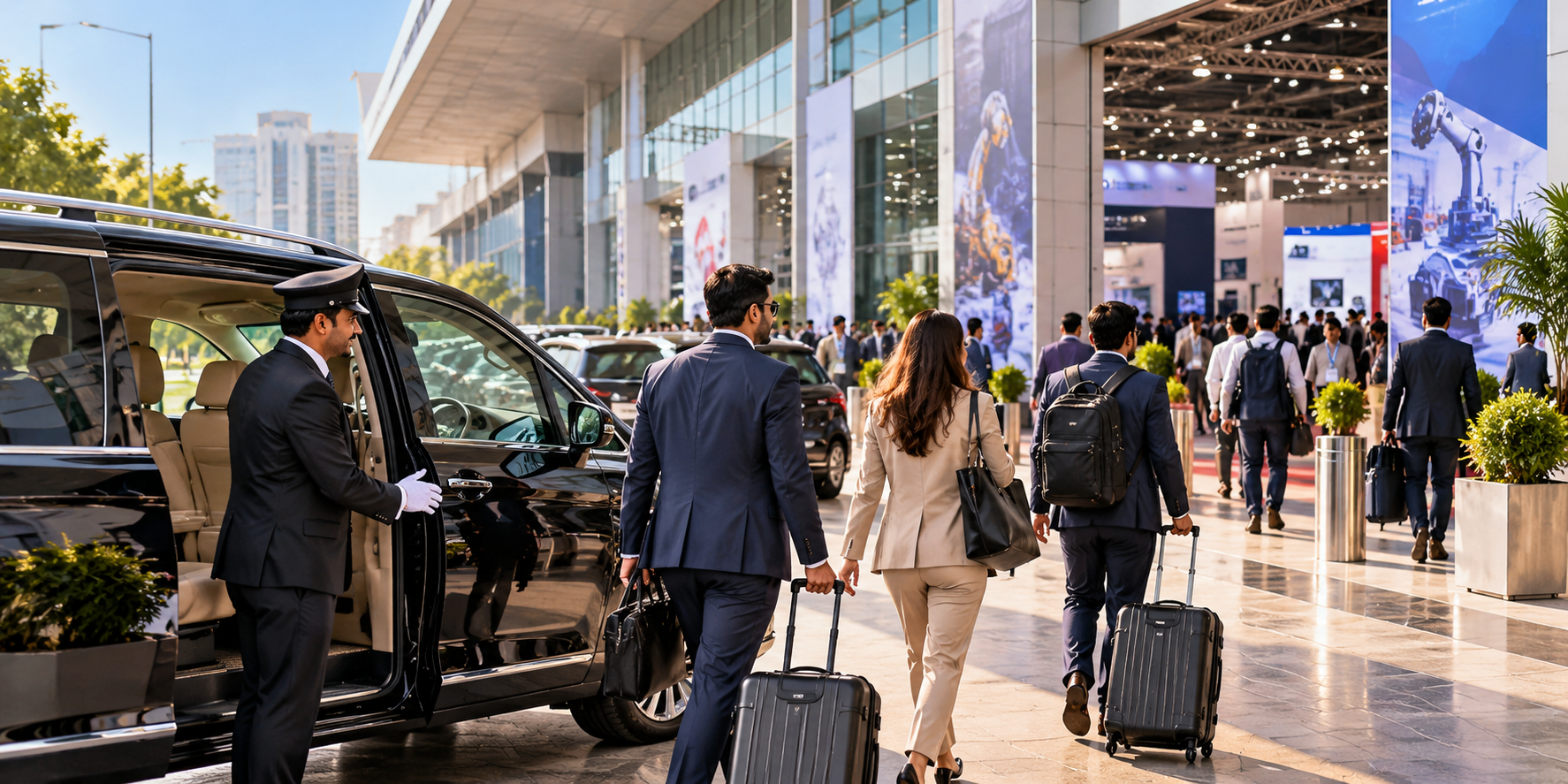
It exists in airport transfer vehicles where executives review presentations before flights. It exists in corporate cabs where managers approve budgets while travelling between meetings. It exists in employee transportation vehicles where teams join conference calls while crossing the city during peak traffic hours.
The workplace is becoming increasingly mobile, and transportation is evolving alongside it.
Traffic will continue growing.
Cities will continue expanding.
Commute times will continue increasing.
The question is no longer how businesses avoid these challenges.
The question is how they adapt to them.
For many professionals in Bangalore, the answer is already clear.
The office no longer begins at the office building.
Sometimes, it begins the moment they step into the cab.
Corporate transportation services provide organized travel solutions for employees, executives, airport transfers, and business travel through professionally managed vehicles and chauffeurs.
Corporate transportation services allow employees to use commuting time for meetings, planning, presentations, and communication instead of losing productive hours in traffic.
Yes. Many professionals now regularly attend virtual meetings, review presentations, and coordinate with teams while travelling in chauffeur-driven corporate vehicles.
Cities such as Bangalore, Mumbai, Delhi NCR, Hyderabad, Chennai, and Pune benefit significantly because of increasing traffic congestion and longer commute times.
Yes. Startups, SMEs, and large enterprises increasingly use corporate transportation solutions to improve employee experience and operational efficiency.
Most modern transportation providers offer GPS-enabled vehicles with live tracking, route optimization, and trip monitoring features.